

Table of Contents
- What Makes a Top-Rated Downrigger Reliable
- Electric vs. Manual Downrigger Comparison for Durability
- Downrigger Maintenance Tips for Longevity
- Troubleshooting Common Downrigger Mechanical Failures
- Saltwater Corrosion Resistance and Stainless Steel Components
- Release Systems and Weight Capacity: What Serious Anglers Need
- Choosing the Right Downrigger for Your Boat and Fishing Style
- Frequently Asked Questions
Last Updated: October 2, 2026
What Makes a Top-Rated Downrigger Reliable
A downrigger with top-rated downriggers reliability for serious anglers is built to perform consistently without mechanical failures, with stainless steel components, reliable clutch systems, and proven depth control mechanisms that hold up under saltwater conditions. At Elliott's Tackle & Rigging, we've spent forty years curating downrigger equipment for anglers who refuse to compromise on reliability.
Reliability means depth control that stays accurate, a release system that fires consistently, and components that resist corrosion. When you're targeting king salmon in the Pacific Northwest or walleye on the Great Lakes, mechanical failure costs you a fishing day and lost revenue if you're a charter captain.
The best downriggers use premium stainless steel throughout cable and hardware, feature manual clutch backups for electrical failure, and match your water conditions. Saltwater demands different materials than freshwater, and Great Lakes conditions differ from Gulf of America trolling.
Electric vs. Manual Downrigger Comparison for Durability
Electric downriggers offer speed and convenience, but manual clutch systems provide a critical backup when power fails. For serious anglers, the best approach is understanding which design works for your boat setup and fishing style, then maintaining it properly.
Electric downriggers retrieve line faster and handle multiple lines efficiently, but depend on battery draw and power cable connections. A corroded terminal can strand you without backup retrieval. Manual clutch downriggers require arm strength but never fail due to electrical issues and rarely fail mechanically if maintained.
Durability depends on electrical system integration. Your boat's electrical system must supply clean power without voltage spikes; many failures stem from poor power supply or corroded connections, not the downrigger itself.
Inspect power cable connections monthly during saltwater season; corrosion at terminals is the leading cause of failure. Manual downriggers eliminate this risk but demand physical effort.
| Downrigger Type | Best For | Key Durability Factor | Failure Point Risk |
|---|---|---|---|
| Electric | Charter boats, multiple lines, speed priority | Power cable corrosion resistance | Battery/circuit breaker connection |
| Manual with clutch | Solo anglers, backup reliability, freshwater | Mechanical clutch smoothness | Spool tension adjustment |
Downrigger Maintenance Tips for Longevity
Downrigger maintenance requires regular inspection of stainless steel components, seasonal clutch lubrication, and proper cable storage.
After each saltwater outing, rinse your downrigger with fresh water, paying special attention to cable attachment points. The Scotty 2401K High-Performance SS Downrigger Cable includes stainless steel crimping sleeves and a soft stop bumper; inspect monthly for salt buildup.

Apply light marine-grade lubricant to the clutch lever and spool tension mechanism seasonally, a single drop on pivot points is enough. For electric downriggers, test the auto-stop feature monthly.
Store cable loosely in a dry location during off-season; never coil tightly on a spool. Kinks create stress points that fail under load. Inspect the full cable length before each season.
Maintenance Checklist for Downrigger Reliability:
Scotty 2401K High-Performance SS Downrigger Cable - 300' →
- Rinse downrigger with fresh water after each saltwater trip
- Inspect cable attachment points for salt crystallization monthly
- Check clutch lever and spool tension mechanism for smooth operation
- Apply light marine lubricant to pivot points seasonally
- Test auto-stop feature (electric models) monthly
- Inspect entire cable length before each season for kinks or damage
- Verify all stainless steel bolts and fasteners are tight
- Confirm release system fires consistently before fishing
Troubleshooting Common Downrigger Mechanical Failures
Mechanical failures on downriggers fall into predictable categories: cable issues, clutch problems, release system failures, and corrosion. Knowing what to look for saves you from lost fishing days.
Cable Problems: Kinks, fraying, or visible corrosion mean replacement time. A kinked cable loses tensile strength and will snap under load. The Scotty 2401K cable includes a complete rigging kit with crimping sleeves and thimble for straightforward replacement.
Clutch Slippage: If the ball descends slowly or won't hold depth, tighten the spool tension knob gradually, one quarter turn at a time. If tightening doesn't help, clutch pads need replacement at a service center.
Release System Failures: If your release doesn't fire, rinse with fresh water and check that the line sits centered in the jaw. Debris or salt crystallization can jam the release. The 40-pack Scotty Power Grip Plus Release (not rigged) gives you spares to rotate while others dry.

Corrosion and Seizing: If the tilt mechanism seizes or cable won't descend, spray penetrating oil into the spool and work gently. Never force a seized downrigger. Let oil soak overnight; if it still won't move, seek professional service.
Saltwater Corrosion Resistance and Stainless Steel Components
Saltwater corrosion is the enemy of downrigger longevity. Stainless steel resists corrosion far better than galvanized alternatives, but material grade and maintenance matter.
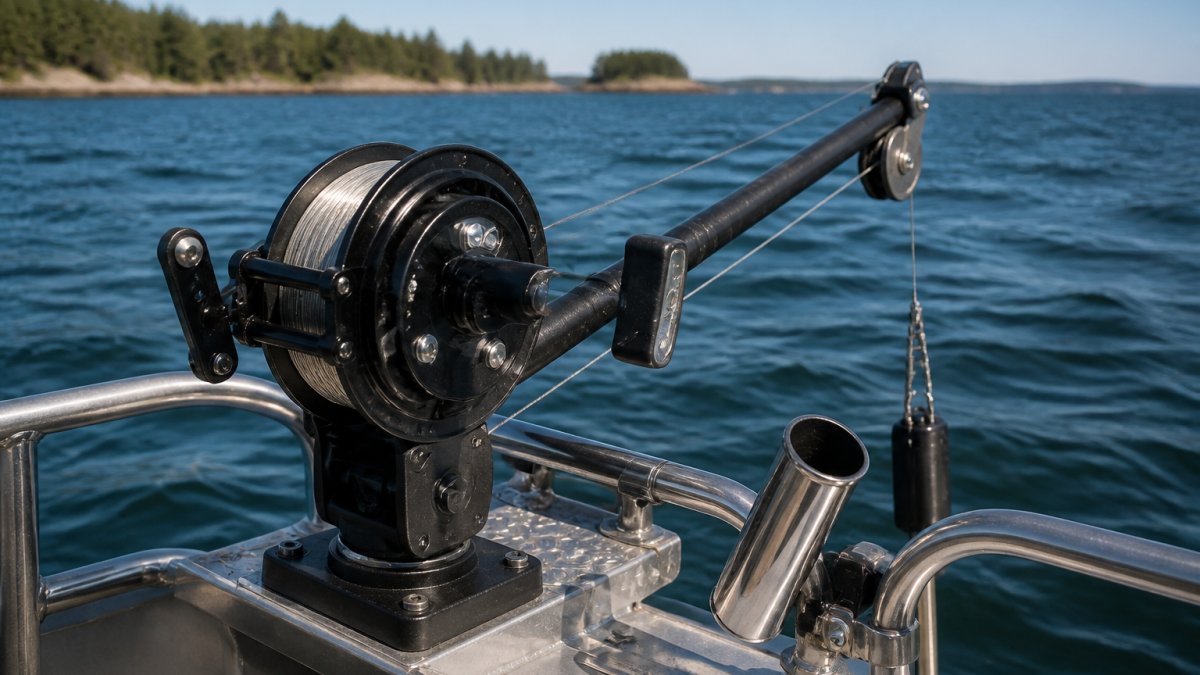
The Scotty 2401K cable uses premium stainless steel rated for saltwater with 180 lb. test strength. It won't develop rust bloom, the orange discoloration that weakens galvanized cable.
The mounting plate, bolts, and fasteners must also be stainless. A single galvanized bolt becomes a corrosion point due to galvanic reaction. Inspect mounting hardware annually and replace discolored bolts with stainless alternatives.
For Great Lakes and East Coast saltwater fishing, rinse your entire downrigger system with fresh water immediately after each trip. Saltwater dries and crystallizes on metal surfaces, accelerating corrosion.
The Scotty 3134 Downrigger Security System uses fiber-reinforced nylon molded over a stainless steel plate, a design that protects the steel from direct saltwater exposure while maintaining strength.
Release Systems and Weight Capacity: What Serious Anglers Need
A release system is only as reliable as its ability to grip your fishing line consistently and fire when a fish strikes. Weight capacity determines how much downrigger ball your system can handle and still function smoothly.
Most trolling setups use downrigger balls ranging from 4 to 16 pounds, depending on depth and current. Your release system must accommodate the ball weight you're using without slipping or sticking.
The Scotty Mini Power Grip Plus Release comes in two configurations: the 1181 with a cannonball snap and the 1180 with a cable snap for stacking multiple lines.
For charter operations running dozens of releases, the Scotty Power Grip Plus Release (not rigged) 40-pack offers economy and flexibility. You rig each release with your choice of leader material and terminal hardware, then rotate fresh releases into service while others dry and rest between trips. This approach extends the life of individual releases because they're not in constant use.
Scotty 2401K High-Performance SS Downrigger Cable - 300' →

Weight capacity isn't just about the ball, it's about your boat's electrical system if you're running electric downriggers. A 16-pound ball on an electric downrigger demands more battery draw and creates higher retrieval loads.
Choosing the Right Downrigger for Your Boat and Fishing Style
Choosing a reliable downrigger starts with matching the system to your boat size, fishing environment, and personal preference for manual versus electric operation.
For boats under 20 feet fishing freshwater lakes, a manual downrigger with a solid mechanical clutch is often the best choice. Manual systems are simpler, require no electrical integration, and rarely fail.
Consider your mounting options. Transom-mounted downriggers attach to the back of the boat and work well for smaller vessels.
Saltwater versus freshwater matters too. Saltwater downriggers must use stainless steel cable and corrosion-resistant hardware throughout. Freshwater systems can use galvanized alternatives, which cost less but require more frequent maintenance. If you fish both environments, invest in saltwater-rated equipment, it works fine in freshwater but gives you flexibility to chase saltwater opportunities.
Budget matters, but don't confuse price with value. Elliott's Tackle & Rigging hand-selects equipment based on field-tested durability, not lowest price.
Start with the release system that matches your trolling style. If you're stacking multiple lines, you need releases that stack smoothly without binding.
The right downrigger isn't the fanciest one.
Choosing a reliable downrigger means prioritizing stainless steel construction, proven mechanical systems, and proper maintenance over flashy features.
Frequently Asked Questions
What are the best downrigger releases for reliability?
The Scotty Mini Power Grip Plus Release with cable snap ($7.99) and cannonball snap ($6.99) options deliver consistent, repeatable performance. Both feature compact designs that grip your line securely without premature slip. For high-volume anglers, the 40-pack Power Grip Plus Release ($279.99) provides bulk supply at reliable quality. Choose cable snap for smooth stacking on your downrigger; choose cannonball snap for direct ball attachment. All are compatible with Scotty downrigger systems and built for saltwater durability.
How do I prevent mechanical failures in my downrigger system?
Mechanical failures stem from corrosion, improper cable tension, and worn components. Start with premium stainless steel cable like the Scotty 2401K (300 feet, 180 lb. test, $35.99), which resists saltwater degradation. Check cable for fraying and kinks monthly. Inspect release mechanisms for cracks and verify they hold line tension correctly. Rinse your entire system with fresh water after each saltwater trip, and apply light corrosion-inhibiting oil to moving parts. Replace worn releases before they fail on the water. Store your downrigger in a dry location during off-season.
Are manual or electric downriggers more prone to mechanical issues?
Manual downriggers have fewer failure points because they lack motors, batteries, and electrical circuits. Electric systems add complexity: battery drain, corrosion in power cables, and circuit breaker trips can strand you mid-trip. However, electric downriggers offer speed and ease on long days. Manual systems demand physical effort and slower retrieval, but they're simpler to repair on the water. Serious anglers often run both: electric for speed when fishing all day, manual as backup. The key is maintenance, either type fails if cables corrode or releases wear unchecked.
What should I look for in a top-rated downrigger for saltwater fishing?
Saltwater demands stainless steel construction, sealed electrical connections (if electric), and corrosion-resistant cable. Look for systems with 180+ lb. test cable rated for your boat size and trolling speed. Verify the release mechanism grips your line without slip and resets cleanly. Check weight capacity against your typical ball weight and fishing depth. Ensure the mounting plate (transom or gunwale) is stainless steel or powder-coated to resist rust. Buy from suppliers who hand-select gear for field conditions, not just catalog specs. Test the system in your specific water before committing to a long trip.
0 comments