

Table of Contents
- Why Salmon Fishing Demands a Real Safety Checklist
- 1. Wear a Life Jacket Built for Fishing
- 2. Fishing Safety Equipment Checklist: Signals, Lights, and Communication
- 3. Cold Water Fishing Safety: What Happens When You Go In
- 4. Boating Safety Gear Checklist for Salmon Boats
- 5. Sun, Weather, and Foul-Weather Protection
- 6. Salmon Fishing Safety Tips by Environment
- 7. Inspect, Maintain, and Re-Check Before Every Trip
- Frequently Asked Questions
Last Updated: October 15, 2026
Why Salmon Fishing Demands a Real Safety Checklist
Salmon fishing safety starts with one hard truth: cold water kills faster than most anglers expect, and the gear that saves you has to be on your body before anything goes wrong.
Here's what most safety guides get wrong. They hand you a generic boating list written for a sunny afternoon on a lake, then call it done. Salmon fishing is not that.
Below, we break down the seven essentials we'd want on any salmon boat, plus how to choose, fit, and maintain each one.
1. Wear a Life Jacket Built for Fishing
A life jacket is the one piece of safety equipment that has to work without you thinking about it. Coast Guard requires wearable life jackets aboard recreational vessels, and for good reason: most drowning victims in boating accidents were not wearing one (U.S. Coast Guard boating safety data).

The catch is that a bulky vest you hate wearing ends up stuffed under a seat. That's why we point salmon anglers toward fishing-specific vests with low-profile foam and pocket layouts built for tackle, not just floatation.
Three options we keep on the shelf:
- Onyx Airspan Angler Life Jacket ($119.99): The AirSpan back panel expands as you cinch the side straps, creating an air gap that keeps you cooler on warm-weather runs. It carries two large zippered pockets, a speed pouch, and a tool holder. U.S. Coast Guard approved.
- Onyx Kayak Fishing Vest ($119.99): Six adjustment straps, a high foam back that clears tall boat seats, and a cargo pocket sized for a VHF radio or long-nose pliers. Available in universal and oversized.
- Onyx M-24 Inflatable Life Jacket ($104.99): A manual pull-cord inflatable with backup oral inflation, Type V with Type III performance, and a chest size range of 30 to 52 inches. Best for anglers 16 and older over 80 pounds who want almost no bulk.
How to Choose and Fit Your Life Jacket
Fit beats features every time. A loose vest can ride up over your head in the water, which defeats the entire purpose.


- Zip and buckle every closure, then have someone pull up on the shoulders. If it slides above your ears, it's too loose.
- Tighten the side and shoulder straps until the vest hugs your torso without restricting breathing.
- Test in shallow water before you trust it on open water.
- Match the type to your activity: inflatables for open boats and trolling, foam vests for kayaks and drift boats where you may hit the water fast.
2. Fishing Safety Equipment Checklist: Signals, Lights, and Communication
Signaling gear is what turns a bad situation into a rescue. On the water, being seen and heard matters as much as staying afloat.
Distress Signals and Safety Lights
Federal rules require recreational vessels operating on coastal waters, the Great Lakes, and most large bodies of water to carry approved visual distress signals for day and night use (U.S. Coast Guard visual distress signal requirements).
The ACR ResQFlare PRO ($199.95) is a buoyant electronic visual distress signal device that meets the night signal requirement and, paired with the included distress flag, covers day and night signaling for recreational vessels up to 65 feet.
Onyx Kayak Fishing Vest - Adult Universal - Tan/Grey →
For personal marking, the ACR C-Light H2O ($24.99) activates automatically on water contact and runs 30-plus hours on two AA batteries. Clip it to your PFD and forget about it until it matters.
Radio and Emergency Communication
A VHF radio is the standard for on-water communication, and a whistle is the low-tech backup that never runs out of battery.
- ACR Res-Q Whistle ($7.99): Dual-tone output up to 100 dB, flat profile so it won't fill with water, and a lanyard that clips to your life jacket.
- ACR GlobalFix V5 EPIRB Survival Kit ($979.99): A Category 2 GPS AIS EPIRB with Return Link Service, plus a buoyant RapidDitch bag that floats up to 15 pounds of gear. Built for offshore and bluewater runs.
- ACR GlobalFix V6 EPIRB Survival Kit ($809.95): Same ready-to-grab concept with a 406 MHz beacon, a HemiLight 3 survivor locator, a strobe, a signal mirror, and a whistle.
One thing nobody tells you about EPIRBs: you must register the beacon with NOAA before you use it, and registration is free. An unregistered beacon still transmits, but responders lose the contact and vessel details that speed up a rescue.
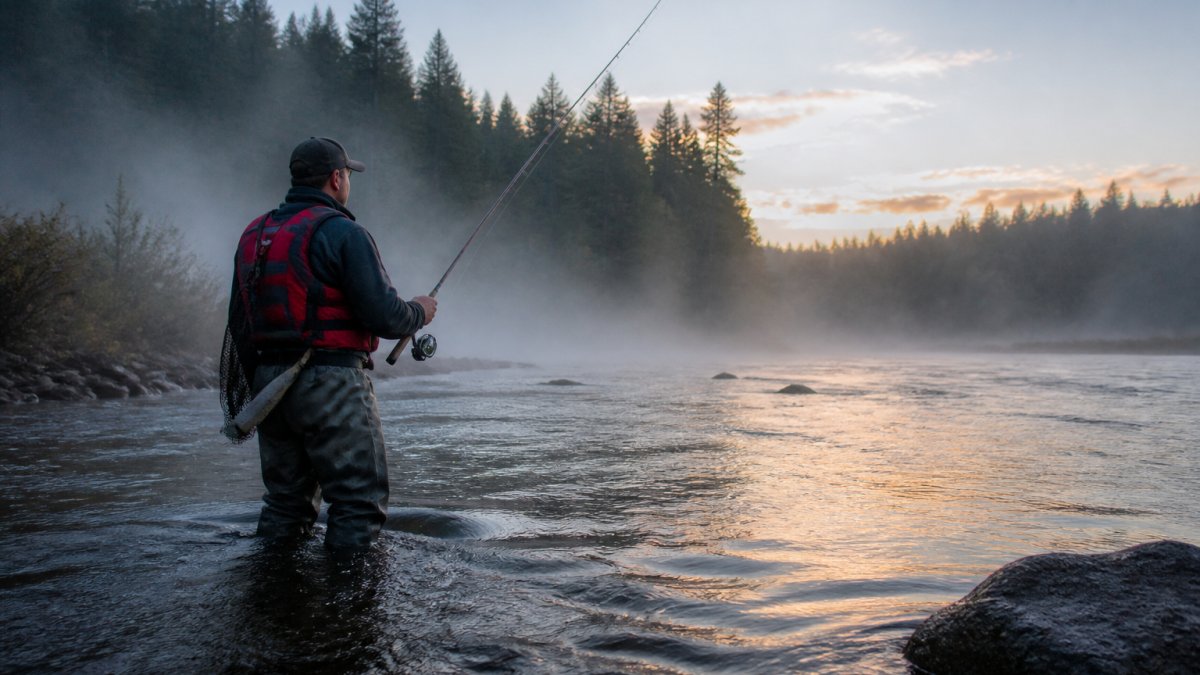
3. Cold Water Fishing Safety: What Happens When You Go In
Cold water is the hazard that catches experienced anglers off guard. Water in the 50s and below strips body heat roughly 25 times faster than air of the same temperature, which is why hypothermia can set in within minutes even on a mild day.
4. Boating Safety Gear Checklist for Salmon Boats
Boating safety gear is the category where a checklist earns its keep. Required items vary by vessel length and water type, so confirm your setup against current Coast Guard carriage requirements before every season.
Beyond the required life jackets and signaling gear, here's what we keep aboard:
| Item | Where It Lives | Why It Matters |
|---|---|---|
| Throwable flotation device | Within arm's reach of the helm | Fast response to a person overboard |
| Rescue throw bag | Tied off near the stern | Retrieves a swimmer without entering the water |
| Fire extinguisher | Mounted, not buried | Fires spread in seconds on a fuel-fed boat |
| Anchor and rode | Bow locker | Holds position when power or weather fails |
| Oars or paddles | Secured on deck | Backup propulsion for a dead engine |
| Bailer or manual pump | Bilge area | Removes water from a swamped boat |
| First aid kit | Dry storage | Handles cuts, hooks, and burns before they escalate |
The Onyx Commercial Rescue Throw Bag ($62.99) carries 50 feet of floating polypropylene rope with 1,800 pounds of breaking strength, reflective material for low light, and a grab strap.
5. Sun, Weather, and Foul-Weather Protection
Sun protection and weather protection are the two most-skipped categories on any salmon checklist, and both cause real problems.
Start with sunscreen rated SPF 30 or higher, applied to ears, neck, and the backs of your hands, and reapply every couple of hours.
Foul-weather gear is the other half. Look for waterproof, breathable layers with sealed seams, and dress in layers you can shed as the day warms.
- Base layer: moisture-wicking, not cotton
- Mid layer: fleece or wool for insulation
- Outer layer: waterproof shell with a hood that cinches
- Extras: neoprene gloves, a spare dry bag, and a change of clothes sealed in plastic
6. Salmon Fishing Safety Tips by Environment
Salmon fishing safety tips change with the water you're fishing, and treating every trip the same is how people get hurt. A river, a coastal bay, and open ocean each carry a different hazard profile.
River, Coastal, and Offshore Differences
River fishing brings current, slippery rock, and cold water within arm's reach. Wear a wading belt, carry a staff, and never turn your back on the water.
Onyx Kayak Fishing Vest - Adult Universal - Tan/Grey →
Coastal fishing adds tides, fog, and bar crossings.
Offshore fishing raises the stakes on distance and weather. File a float plan, carry an EPIRB, and make sure your VHF has the range to reach help.
7. Inspect, Maintain, and Re-Check Before Every Trip
Inspection and maintenance are what keep a checklist from becoming decoration. Gear that sat in a locker all winter needs a real look before it earns a spot on the boat.
Run this before every launch:
- Inflate and inspect life jackets; check CO2 indicators and re-arm kits
- Confirm distress signals are within their service life and lights have fresh batteries
- Test the VHF radio and check the antenna connection
- Verify the EPIRB registration is current and the battery indicator reads good
- Inspect the throw bag for fraying and confirm the line is properly stuffed
Replace what's expired, not what's convenient. A flare that died in the tube or a whistle with a cracked body won't help you when the weather turns.
Salmon fishing rewards preparation, and the water doesn't care how long you've been doing this.
Frequently Asked Questions
What safety gear should you bring salmon fishing?
At minimum: a U.S. Coast Guard approved life jacket sized to your body weight, a throwable flotation device for boats over 16 feet, a whistle or other sound-signaling device, a working flashlight or distress light, and a first aid kit. For coastal and offshore trips, add a VHF radio and visual distress signals. A waterproof layer, drinking water, and sun protection round out the list. Build your kit around where you fish, then inspect every item before each trip.
Do you need a life jacket while salmon fishing?
Yes. U.S. Coast Guard rules require an approved, properly sized life jacket for each person on board, and children must wear one while underway. Beyond the legal requirement, cold water dramatically reduces your ability to swim, so wearing your life jacket at all times is the single most effective salmon fishing safety habit. Inflatable models like the Onyx M-24 are light enough to fish in all day without noticing them.
How do you stay safe fishing in cold water?
Dress for immersion, not just the air temperature. Wear layers that retain warmth when wet, put your life jacket on before you step near the water, and carry a throw bag so you can reach a partner without entering the water yourself. If you do go in, control your breathing, keep your head above water, and get out or onto something floating as fast as you can. Cold water fishing safety starts with assuming you could end up in it.
What safety equipment should be on a fishing boat?
Carry a life jacket for every person, a throwable flotation device, a fire extinguisher, visual distress signals, a sound-producing device like a whistle or horn, navigation lights for low visibility, and a first aid kit. Add a VHF radio and an EPIRB for offshore runs. A rescue throw bag such as the Onyx 50-foot bag gives you a way to recover someone overboard quickly. Check expiration dates and battery status before every season.
How can you prepare for changing weather while fishing?
Check the marine forecast before you leave and again while you are on the water. Carry foul-weather gear that blocks wind and rain, and keep a dry layer sealed in a bag. Fog, wind shifts, and afternoon storms move fast on open water, so set a turnaround time and stick to it. If the forecast is marginal, fish closer to your launch point. Preparation, not luck, is what keeps a salmon trip safe.
0 comments