

Last Updated: November 5, 2026
Quick Summary
King salmon trolling on Lake Ontario means pulling bait or lures behind a moving boat at the depth where the fish are holding. Anglers control that depth with downriggers, divers, or weighted lead-core and copper lines, paired with flashers and meat rigs.
- Mature kings feed offshore in late summer, with strong action reported from Wilson to Oswego.
- The Scotty 1050 Depthmaster Compact Manual Downrigger includes 200 feet of 150-pound stainless steel cable.
- The Krunch Meat Rig has a 48-inch length, 50-pound fluorocarbon leader, and size 1/0 hooks.
- Run Too Strong Premium Trolling Flies 25 to 30 inches behind your attractor.
- Give your spread room, since flashers and flies run too close can tangle during turns.
Table of Contents
- Understanding Lake Ontario King Salmon and Their Seasonal Patterns
- Rods, Reels, and Line Capacity for Lake Ontario Trolling
- Salmon Trolling Setup with Downrigger
- Salmon Trolling Setup without Downrigger
- Salmon Trolling Setup for Beginners: A Budget Gear List
- Lures, Flashers, and Meat Rigs That Trigger Strikes
- Start Building Your Lake Ontario Trolling Spread at Elliott's Tackle & Rigging
- Frequently Asked Questions
Understanding Lake Ontario King Salmon and Their Seasonal Patterns
Lake Ontario king salmon are one of the most rewarding trolling targets in the Great Lakes, and Elliott's Tackle & Rigging has built this Lake Ontario King Salmon Trolling Gear Guide to help you put the right gear in the water. New York State stocks approximately 1.7 million king salmon each year (Ace Charters, Lake Ontario Fishing Forecast for 2026), so the fishery is deep and consistent.
Those big fish move with the seasons, and your gear choices should follow them. In late summer, mature kings feed offshore, with strong action reported from Wilson to Oswego (OnTheWater, Upstate and Western New York Fishing Report, August 2026).
Trolling is the method most anglers rely on here. FishingBooker describes trolling as the most popular technique for hooking salmon on the lake (FishingBooker, Lake Ontario salmon fishing guide).
Researchers have also been tracking these fish directly. Cornell University scientists have used satellite tags to follow Lake Ontario king salmon, and the fish can exceed 3 feet in length (Cornell University, satellite tags track Lake Ontario king salmon).
Rods, Reels, and Line Capacity for Lake Ontario Trolling
Your rod and reel are the link between you and a strike, so match them to the fish and to the presentation you plan to run. For diver work, the Ice Strong Outdoors Manasseh Diver Rods are a strong pick: they come in 9-foot and 10-foot lengths, with a line rating of 15 to 30 pounds and a roller-tip option ([Manasseh Diver Rods | https://www.elliottstackleandrigging.com/products/ice-strong-outdoors-manasseh-9-10-diver-rods-roller-tip-regular-tip]).

Line capacity matters as much as the rod. Count your line before you head out, and keep a line counter handy so you can repeat the depths that produced fish.
Choosing Line Type and Strength
Line choice drives how deep your presentation runs and how well it survives a big king. Three families cover most trolling here:
- Braided main line, low stretch and thin diameter, so it cuts through the water and lets you feel a flasher working.
- Monofilament, stretchy and forgiving, which helps keep hooks from tearing out on a violent strike. It is a common choice for a leader or for anglers who want a softer fight.
- Fluorocarbon, used as leader material behind flashers and meat rigs.
Match strength to the presentation. A 15- to 30-pound main line covers most downrigger and diver work, while a 40- to 50-pound fluorocarbon leader is common behind a flasher where the fish sees the bait up close. Heavier line holds more water and drags your presentation shallower, so do not overspool out of caution.
Spooling for Depth and Backing
Choose a reel with enough line capacity to let a king run without spooling you. Many anglers fill the spool with braided backing and top it with a working length of the line they plan to fish, so a deep run does not empty the reel.
Watch out: Mixing line types on one reel without a proper connection knot can fail under a hard strike, so join backing to main line with a knot rated for the heavier of the two lines.
Ice Strong Outdoors - Krunch Meat Rigs →
Salmon Trolling Setup with Downrigger
A downrigger lets you place your bait at an exact depth, which is why most serious Lake Ontario anglers use one. Start by choosing a reliable unit, then dial in the release and depth settings that keep your presentation where the fish are. We recommend a manual unit for most anglers starting out.
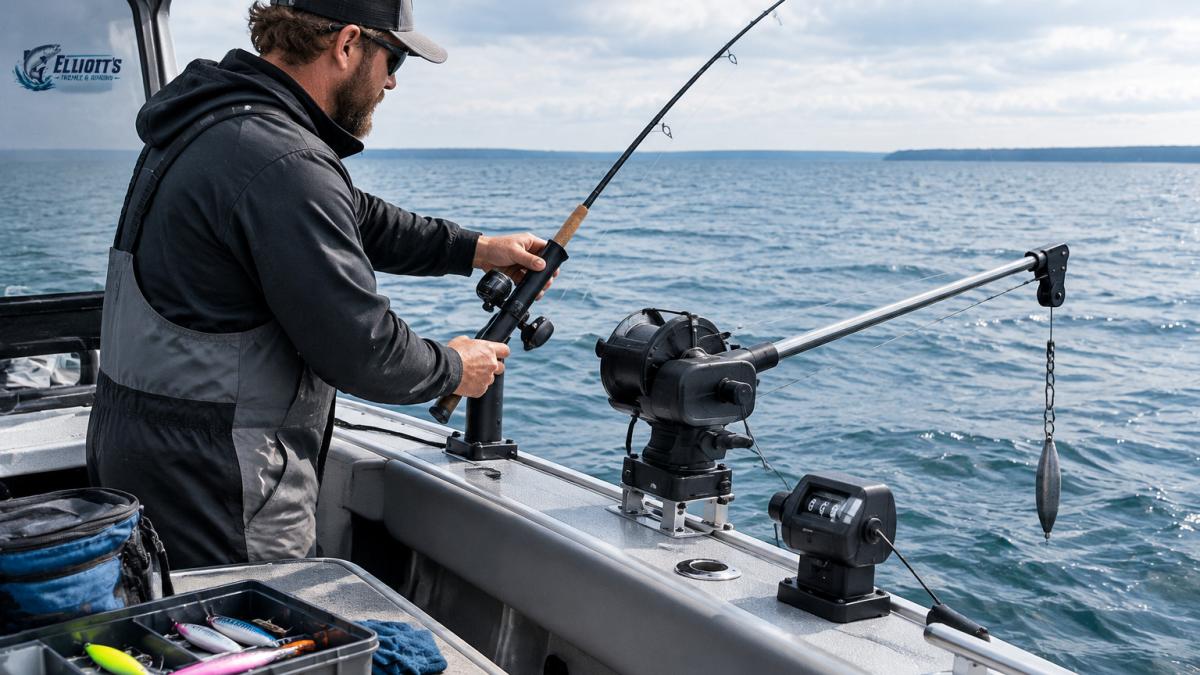
Choosing a Downrigger and Rod Holder
The Scotty 1050 Depthmaster Compact Manual Downrigger is a strong choice for a single-person setup. It runs one foot of line per spool turn, works from either hand while seated, and includes a clutch brake that pays out line automatically if you hang bottom.

Pair the downrigger with a rod holder that keeps your rod steady during the troll and frees your hands for the net.
Depth Control and Line Release Settings
Depth is where most trips are won or lost. Set your downrigger weight to the depth you want, then adjust the line release so a strike pulls the line free without a fight that spooks the fish. Follow this Great Lakes downrigger setup step-by-step guide to walk through each adjustment in order. Check your depth counter often, because a few feet of drift can take you out of the zone.
Salmon Trolling Setup without Downrigger
You don't need a downrigger to catch Lake Ontario kings. Several presentation systems get your bait down without a cannonball, and each trades precision for simplicity in a different way. The right pick depends on how deep the fish are holding and how much control you want.
Dipsy Divers and Dive Charts
A diver is a planing device that pulls your line down and out to the side as you troll. You set it to a numbered release, let out a measured amount of line, and read the dive chart to estimate depth. The trade-off is that depth depends on speed and line out, so a speed change moves your bait. Run a diver on a medium-heavy rod with a line rating that matches your main line, and keep a dive chart taped inside the boat so you can repeat a setting that produced.
Lead Core, Copper, and Weighted Steel
Weighted line systems sink on their own and are measured in colors or feet rather than by a diver setting:
- Lead core, a lead-filled line sold in 10-yard colors. Each color sinks a predictable amount at a given speed, so counting colors out is how you set depth. It is forgiving and easy to read.
- Copper, a copper wire line used for deeper presentations.
- Weighted steel, a thin steel line used for deeper presentations.
All three reward a line-counter reel, because depth is a function of how much line is out. Let out a measured length, note the counter, and repeat it when a fish hits.
When to Skip the Downrigger
Run a diver or weighted line when you are searching water, when you want lines spread away from the boat, or when you are fishing shallower than a downrigger ball would track cleanly.
Watch out: A diver or weighted line that is let out too fast can tangle with a downrigger line on a turn, so set your outside lines first and turn away from the spread rather than through it.
Salmon Trolling Setup for Beginners: A Budget Gear List
Starting out doesn't require a full tournament spread. A practical beginner list keeps the cost reasonable while giving you what you need to catch fish:
- A medium-heavy trolling rod and a level-wind reel with line rated for the depths you'll fish
- One manual downrigger and a rod holder, such as the Scotty 1050 Depthmaster listed above
- A few flashers and meat rigs to start, rather than a full selection
As you gain experience, add a second rod and expand your flasher and lure selection. Buying in stages lets you learn which presentations your local fish prefer before you commit to a full spread.
Ice Strong Outdoors - Krunch Meat Rigs →
Lures, Flashers, and Meat Rigs That Trigger Strikes
Presentation is where a trolling spread comes together. Flashers create the flash and vibration that draw fish in, and a bait or fly trails behind to close the deal.
Watch out: Running a flasher and fly too close together can tangle your lines during turns. Give your spread room and check your lines after every adjustment.
The table below summarises the presentation components covered in this section and the key facts stated for each.
| Component | Key Detail | Note |
|---|---|---|
| 8.5" Dual Fin Flasher | Pairs with Krunch Meat Rig | Designed for flash and vibration |
| Krunch Meat Rig | 48-inch length | 50-pound fluorocarbon leader, size 1/0 hooks |
| Too Strong Premium Trolling Flies | Fully rigged | Face grabber harness |
| Trolling Flies spacing | 25 to 30 inches | Run behind the attractor |
Start Building Your Lake Ontario Trolling Spread at Elliott's Tackle & Rigging
Every piece of gear in this guide works together: a solid rod, a reliable downrigger, and a presentation that fish want to hit. Elliott's Tackle & Rigging selects its gear with hands-on attention from an experienced captain, so you can build a spread you trust. Start with the downrigger and rod holder, add a flasher and a meat rig, and fill in the rest as you learn your water.
Frequently Asked Questions
How fast should you troll for king salmon?
Most Lake Ontario anglers troll for king salmon at roughly 2 to 3 miles per hour, adjusting speed to the lure and water conditions. Slower speeds often work better with meat rigs and flies, while faster speeds can help with spoons and flashers. Check your speed with a GPS or boat speedometer and make small changes until you see consistent strikes. Water temperature and the depth of the fish should guide these adjustments throughout the season.
What is the 50-2 method for trolling?
The 50-2 method is a rule of thumb that sets the amount of line you let out to reach a target depth. You pay out a certain length of line from the rod, then adjust based on the depth your fish finder reports. Anglers use it as a starting point, not a fixed rule, and refine it as they learn how their lures track at different speeds. Combining this method with a depth reading helps you keep your presentation in the strike zone.
What gear do you need for a king salmon trolling setup with downriggers?
A complete downrigger setup needs a downrigger with a stainless steel cable, a boom-mounted rod holder, a trolling rod, a level-wind or line counter reel, and a line release to hold the rod until a fish strikes. You will also need a leader, a lure or meat rig, and a depth counter to track your position. Elliott's Tackle & Rigging carries the Scotty 1050 Depthmaster Compact Manual Downrigger for $227.99, a single-hand-operable unit that is fully assembled and factory tested.
Can you troll for king salmon without downriggers?
Yes. Many anglers troll for king salmon without downriggers by running diver rods, planer boards, or lead core and copper line to reach the depth where fish are holding. Divers and copper lines let you present lures at different depths without a downrigger, although they require more line management. This approach works well for anglers who want a lower-cost setup or who fish smaller boats with limited deck space.
What are the best trolling lures for king salmon?
Spoons, flashers with flies, and meat rigs are common trolling options. Flashers paired with a fly or a meat rig imitate baitfish and create flash and vibration that salmon respond to. Ice Strong Outdoors 8.5 inch Dual Fin Flashers, available at Elliott's Tackle & Rigging for $19.99, are designed to pair with Krunch Meat Rigs and Too Strong Premium Trolling Flies. Lure choice should match the water temperature, baitfish present and depth you are fishing.
What rod, reel, and line should you use for trolling king salmon?
A medium to medium-heavy diver or trolling rod in the 9 to 10 foot range works well for most Lake Ontario trolling. Pair it with a level-wind or line counter reel that holds enough line for the depths you fish. Braid, monofilament, or a fluorocarbon leader are common choices, with a 20-pound test line suiting many spreads. The Ice Strong Outdoors Manasseh Diver Rods, available at Elliott's Tackle & Rigging for $189.99, offer a 15 to 30 pound line weight range for diver presentations.
How do you set up a meat rig for Lake Ontario salmon?
A meat rig combines a bait strip or cut bait with a hook, a leader, and a swivel, then is trailed behind a flasher or fly. Begin with a 48 inch leader, attach a size 1/0 hook, and add glow or UV beads to improve visibility. The Ice Strong Outdoors Krunch Meat Rigs, priced at $20.49 at Elliott's Tackle & Rigging, come pre-built with a 50-pound fluorocarbon leader and a 1/0 VMC hook. Adjust the length of the leader and the type of bait to suit your fishing conditions.

0 comments