

Table of Contents
- What You'll Need Before You Start Your Downrigger Setup
- Mounting Your Downrigger: Placement and Hardware
- Downrigger Weight and Cable Setup for Great Lakes Trolling
- How to Attach a Downrigger Release to Your Line
- Downrigger Trolling Depth: Setting the Ball and Lead Length
- Downrigger Rod and Reel Setup for Salmon and Trout
- Building a Multi-Rod Trolling Spread Without Tangles
- Troubleshooting Common Downrigger Setup Problems
- Frequently Asked Questions
Last Updated: October 14, 2026
What You'll Need Before You Start Your Downrigger Setup
A Great Lakes downrigger setup starts with four things: a downrigger, a mounting base, a release, and the right rod and reel. At Elliott's Tackle & Rigging, we've rigged boats for salmon, trout, and walleye trolling.
- Downrigger (manual or electric)
- Mounting base or track plate
- Downrigger cable or braid
One warning: match the downrigger to your boat, not your budget. A 24-inch boom works on a 16-foot aluminum boat but may not clear the hull on a wide-beam glass boat.
Manual vs. Electric Downriggers: Which Fits Your Boat
Manual downriggers win on small boats and tight budgets. Electric wins when running deep, running multiple rods, or fishing long days.
The Cannon Uni-Troll 5 ST Manual Downrigger is our pick for most small and mid-size boats.

Step up to the Cannon Magnum 5 Electric Downrigger for deep fishing and stacked rods. It retrieves at 250 feet per minute, the Short-Stop halts the weight at the waterline, and it ships with 250 feet of 150-pound stainless cable, a 24-inch stainless boom, and Positive Ion Control.

Mounting Your Downrigger: Placement and Hardware
Mount downriggers as far aft as practical, on flat, reinforced gunwale or a dedicated track, solid material, not thin gelcoat over foam.
The Downrigger Plate Mount is a solid choice. It's heavy-duty aluminum, pre-drilled to fit most major downrigger brands, and works with the Tite-Lok track system.

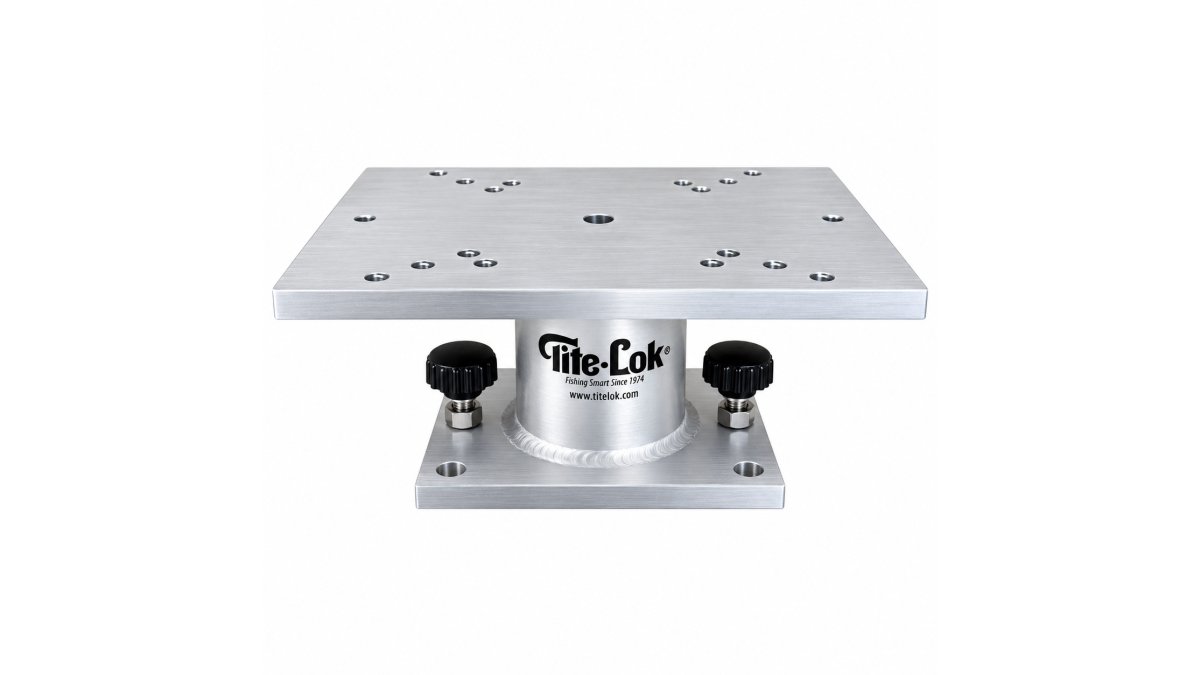
Port, Starboard, and Center Positions
Port and starboard positions are the standard spread. The center position is the wildcard.
- Port and starboard: One downrigger on each side, booms angled slightly out and back. Keeps lines separated and lets you run a wide spread.
- Center: A single center downrigger runs straight off the transom. Great for a lone deep rod, but can tangle with outboard steering and prop wash.
- Stern corner: Popular on smaller boats. Keeps the boom clear of the console and puts the ball behind the prop.
On a small boat, two corner mounts beat one center mount every time, two clean lines and no interference with the motor.
Downrigger Weight and Cable Setup for Great Lakes Trolling
Weight and cable decide whether your ball fishes where the depth counter says it does. Get them wrong and you're trolling 15 feet above the salmon you're marking on sonar.
Picking Ball Weight by Speed, Depth, and Species
A 10-pound ball is the workhorse for most trolling, but ball weight has to beat blowback, the cable's tendency to trail back and up as speed and water resistance push against it.
A simple rule most Great Lakes trollers use:
Walleye anglers trolling slow can use an 8-pound ball; king salmon anglers running fast and deep need 12 to 15 pounds to keep the cable angle steep. A lighter ball at salmon speed drags back at 45 degrees and fishes 20 feet shallower than the counter reads.
Match the ball to your downrigger's rated capacity. The Cannon Uni-Troll 5 ST Manual Downrigger and the Cannon Magnum 5 Electric Downrigger both handle 10- to 12-pound balls comfortably.
Cable vs. Braid: What Changes Underwater
Stainless cable is the default: dense, low-drag, and it holds a straight line to the ball so your depth reading is trustworthy. Both Cannon units above ship spooled with 150-pound stainless. Braid offers less cable hum and no memory kinks, but more stretch and blowback at speed, so a braid-equipped ball fishes shallower than the counter suggests, run a heavier ball or slower speed to compensate.
Reading Cable Angle to Confirm True Depth
Your depth counter tells you how much cable is out, not where the ball actually is. Cable angle does.
- Cable straight down (0-10 degrees off vertical): Ball is fishing at or near the counter depth. Ideal.
- Cable at 20-30 degrees: Ball is 10-15% shallower than the counter. Common at normal trolling speed with a 10-pound ball.
- Cable at 40+ degrees: Ball is 25% or more shallower. Slow down, go heavier, or accept that your counter is optimistic.
Watch the cable where it enters the water. If it slices in at a steep angle, you're fishing shallower than you think. Adjust ball weight or speed before you adjust your depth counter.
Cable Inspection and Replacement
Check your cable every trip for kinks, frayed strands, rust near the terminator, and flat spots from the release. A cable that fails under load sends your ball, release, and everything clipped to it to the bottom.
Replace stainless cable when you see more than a few broken strands, or every season if you fish hard. Cable is cheap compared to losing a ball and release on a deep king.
How to Attach a Downrigger Release to Your Line
A downrigger release clips to the cable and holds your line until a fish strikes. Setting it right is the difference between hooking fish and losing them.
The Scotty Power Grip Plus Release Leader w/Cable Snap is a proven design. Tension is fully adjustable for light-mouthed walleye or hard-striking kings.
Here's the sequence:
- Snap the release onto the cable at your target depth.
- Pinch your fishing line into the release pads.
- Set tension so the line holds while trolling but pops free on a strike.
- Drop the ball and let the release ride down with it.
Tension is what most people get wrong. Too tight and a small fish drags the ball without tripping the release; too loose and your line pops free in the wash.
Cannon Uni-Troll 5 ST Manual Downrigger →
Downrigger Trolling Depth: Setting the Ball and Lead Length
Set the ball deeper than your target fish, then run your lure back behind the release to reach the strike zone. The ball is your anchor point: to fish 60 feet down, run the ball at 55 to 65 feet and let lead length put the lure where the fish are.
A simple starting point:
| Target | Ball Depth | Lead Length |
|---|---|---|
| Shallow walleye | 20-30 ft | 20-40 ft |
| Mid-depth trout | 40-60 ft | 30-60 ft |
| Deep salmon | 80-120 ft | 40-80 ft |
Watch your sonar. If you mark fish above the ball, shorten the lead. If you mark them below, drop the ball deeper.
Downrigger Rod and Reel Setup for Salmon and Trout
Downrigger rods are soft-tipped and long, usually 8 to 9 feet, so they load up and hold tension against the release. The rod keeps steady pressure on the release so the line stays clipped, and absorbs the shock when a fish hits, a stiff rod pops the release too early, a soft rod loads up and holds. Pair it with a reel that has a smooth drag and enough line capacity for a deep run, and set your drag light since a downrigger fish is already fighting the ball's resistance when it hits.
Building a Multi-Rod Trolling Spread Without Tangles
A multi-rod spread works when every rod has a job: a set depth, lead length, and position. Here's the spread laid out with measurements you can copy.
The Stacked Downrigger Spread
Stacking means running two lines off one downrigger at different depths. Clip the deeper line first, then add a second release above it.
- Vertical separation between releases: 10 to 15 feet minimum. Closer than that and the upper line can foul the lower one on a turn.
- Lead length on the lower line: 30 to 50 feet behind the release.
- Lead length on the upper line: 15 to 25 feet behind the release. The shorter lead keeps the upper line from swinging into the lower one.
Rod Position and Spacing by Boat Width
Rod spacing is where most tangles start. The wider the boat, the wider the spread.
| Boat Beam | Inside Rod Spacing | Outside Rod Spacing |
|---|---|---|
| Under 7 ft | 3-4 ft apart | 5-6 ft apart |
| 7-8.5 ft | 4-5 ft apart | 6-8 ft apart |
| Over 8.5 ft | 5-6 ft apart | 8-10 ft apart |
Measure rod tip to rod tip with rods in their holders. Closer than the numbers above and you're asking for a tangle on the next turn.
Depth Staggering: The Center-Deep Rule
The spread rule: center rods deepest, outside rods shallower. Stagger depth so no two lures fish the same water.
- Center downrigger: Deepest ball, longest lead. This is your deep-water producer.
- Inside rods (port and starboard): Mid-depth, 15 to 25 feet shallower than the center.
- Outside rods: Shallowest downrigger or diver rods, 10 to 15 feet shallower than the inside rods.
A four-rod spread on an 8-foot boat might look like this:
- Center downrigger: ball at 80 ft, lead 50 ft
- Port inside: ball at 60 ft, lead 35 ft
- Starboard inside: ball at 60 ft, lead 35 ft
Turn Geometry: Why Tangles Happen on Turns
A hard turn swings outside lines in and inside lines out, that's when tangles happen. The fix is turn discipline, not more gear.
- Turn radius: Keep turns wide enough that the outside rod tip never crosses inside the inside rod tip. On most boats that means a turn radius of 100 feet or more.
- Turn direction: Turn toward the side with the shallower spread. The deep center rod swings less than the shallow outside rods.
- Speed on turns: Drop speed by 0.3 to 0.5 mph through the turn. Slower speed reduces blowback and keeps lines tracking straighter.
Quick Tangle Diagnosis
- Upper line wraps the lower cable: Releases are too close. Add 5 feet of vertical separation.
- Outside rod crosses inside rod on turns: Spread is too tight or turn is too sharp. Widen spacing or widen the turn.
- Flatline tangles with downrigger line: Flatline is running too short. Push it back another 20 feet.
Troubleshooting Common Downrigger Setup Problems
Most downrigger problems trace back to release tension, lead length, or cable angle.
Release won't trip on a strike. Tension is too tight.
Ball won't hold depth. You're trolling too fast or the ball is too light.
Lines tangle on turns. Your spread is too tight.
Cable hums or vibrates. That's normal at speed, but heavy vibration means the ball is tracking wrong.
Frequently Asked Questions
How far behind the downrigger weight should the lure be?
Lead length depends on species and conditions. For pressured Great Lakes salmon, start with 20 to 40 feet behind the release. In clear water or bright sun, extend to 50 feet or more. In murky water or low light, shorten to 10 to 15 feet. Watch your rod tip: if it stops thumping, your lure is fouled or too far back. Adjust in 10-foot increments until you find what triggers strikes that day.
What rod and reel setup works with downriggers?
Use a 7 to 9-foot medium-heavy trolling rod with a soft tip so you can see the lure action, paired with a level-wind reel holding at least 300 yards of 20 to 30-pound test line. Line capacity matters because deep trolling and long leads eat up yardage fast. A smooth drag is essential since downrigger fish often hit and run. Match your rod's action to your target species: softer for walleye, stiffer for king salmon.
How do you avoid tangles when running multiple downriggers?
Keep your deepest lines closest to the boat and run shallower lines progressively farther out and higher. Space releases at least 10 feet apart vertically when stacking. Turn gently and keep speed consistent, since sharp turns swing outside lines into inside ones. Use longer leads on outside rods and shorter leads on inside rods. If you run four rods, stagger depths by at least 15 feet to create clear separation between your downrigger lines.
How do you set a downrigger for salmon and trout?
Salmon and trout sit at different depths depending on season and water temperature. In spring, fish shallow, so run your ball 15 to 30 feet down. By midsummer, kings often hold 60 to 100 feet deep over cold water. Trout typically suspend higher, so set balls 20 to 50 feet. Watch your fish finder for marks and adjust until your lure runs just above them. Speed matters too: 2.0 to 2.8 mph works for most Great Lakes trolling.
Rigging a boat for Great Lakes trolling comes down to matching gear to your hull, your speed, and your target species. Get the mount solid, the release dialed, and the spread staggered, and the setup does the work.
Elliott's Tackle & Rigging stocks downriggers, mounts, releases, and rigging hardware picked by a captain with forty years on the water. Every item is gear we'd run on our own boats. Browse the downrigger lineup and get your spread fishing right.
0 comments