

Table of Contents
- Essential Striped Bass Trolling Gear for Your Boat
- Rod and Reel Selection for Striped Bass Trolling
- Trolling Rod Holder Systems and Mast Configurations
- Downrigger Setup for Stripers and Depth Control
- Best Trolling Lures for Striped Bass and Lure Presentation
- Striped Bass Trolling Speed and Water Column Positioning
- Rigging Techniques and Common Trolling Mistakes
- Regional Variations and Seasonal Setup Adjustments
- Frequently Asked Questions
Last Updated: September 21, 2026
Essential Striped Bass Trolling Gear for Your Boat
Striped bass trolling demands precision equipment that handles aggressive fish and varying water conditions. The right striped bass trolling gear transforms a casual fishing trip into a productive hunt where every rod works the strike zone. At Elliott's Tackle & Rigging, we've spent four decades selecting gear that delivers results on the water, not just in marketing materials.
The difference between success and frustration comes down to setup. Rod holders, downrigger configuration, and lure presentation directly affect hookup rates. A poorly positioned rod holder misses strikes. A downrigger cable set incorrectly tangles your entire spread.

This guide covers complete boat setup for striped bass trolling across the Pacific Northwest, Great Lakes, East Coast, and Gulf of America waters.
Rod and Reel Selection for Striped Bass Trolling
A 3:1 or 4:1 gear ratio provides the torque for deep-diving lures and crankbaits. Higher ratios retrieve faster but sacrifice power in current or deep water.
Line Weight and Braided vs. Monofilament
Braided line offers superior line capacity, a reel holding 300 yards of monofilament might hold 600 yards of braid, enabling deeper dives and longer runs.
Fluorocarbon Leaders and Terminal Tackle
Use quality ball-bearing swivels with stainless steel construction at both ends of your leader to prevent line twist. Connect main line to leader with an improved clinch knot or Palomar knot.
Trolling Rod Holder Systems and Mast Configurations
Rod holders determine how many lines you can run and their effectiveness. A well-designed system spreads your presentation across multiple depths and distances.
Tree Masts vs. Planer Boards
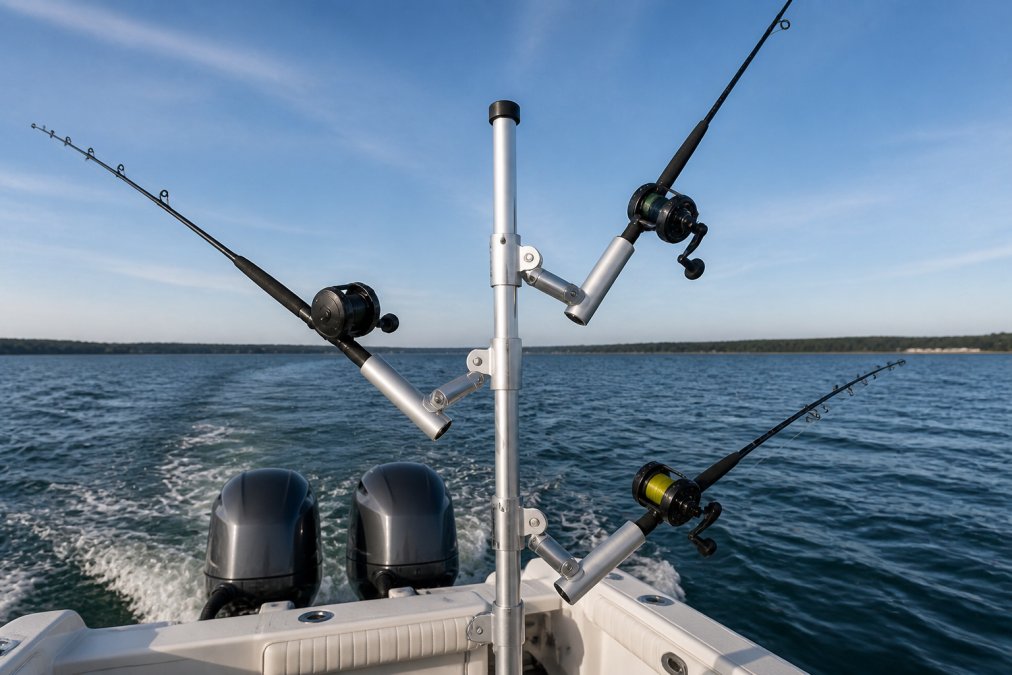
A tree mast provides three or more independently adjustable rod holders on a single vertical post, allowing rods to angle outward, backward, or at any position matching your strategy.
The Cisco Fishing Systems tree mast design uses solid aluminum construction with military-spec anodizing for saltwater durability. Each rod holder rotates independently on an indexable, locking mast, which means you're not locked into one angle. You can spread three rods across different depths and distances without one line interfering with another.
Reel-Up Holders for Line-Counter Visibility
A reel-up rod holder orients your reel face-up, keeping the line counter visible when running line-counter reels with leadcore or deep-diving presentations.
The Cisco reel-up rod holder system keeps large conventional and line-counter reels fully supported while rotating 360 degrees. This matters when you're adjusting your spread during the day. You can see exactly how much line you've deployed on each rod without removing it from the holder.
Reel-up holders excel in Great Lakes trolling setups where leadcore and Dipsy Divers are standard, keeping you in the productive zone during the fight.
Downrigger Setup for Stripers and Depth Control
A downrigger takes your lure to specific depths and keeps it there, removing guesswork about depth based on line weight, lure design, and trolling speed.
A downrigger attaches a heavy weight to a cable. Your fishing line clips to the weight via a release mechanism that lets go when a fish strikes, so you fight the fish on your rod and reel.
Manual vs. Electric Downriggers
Manual downriggers are lighter, simpler, and less expensive than electric models, making them ideal for recreational fishing.
The Scotty manual downrigger with integrated rod holder combines a 30-inch boom with a high-speed spool that retrieves 2 feet of cable per turn. The clutch brake automatically pays out line if you hit bottom, protecting your gear from snap-offs. It includes a depth counter and comes fully assembled with complete saltwater protection.
Cable, Weights, and Release Mechanisms
Connect cable to weight with a ball-bearing swivel to prevent line twist. Attach the release via a snap or clevis pin to prevent lost fish and tangled spreads.
Best Trolling Lures for Striped Bass and Lure Presentation
Lure choice depends on water depth, current speed, and available forage. Understanding when to use each type separates consistent anglers from occasional ones.
Deep Divers and Crankbaits
Deep divers work best between 1.5-2.5 mph. Too slow and they don't dive; too fast and they lose action or plane up.
Spoons, Swimbaits, and Soft Plastics
Use bright colors (chartreuse, white, silver) in stained water or low-light conditions. Use natural colors (browns, blacks, silvers) in clear water or bright sun.
Striped Bass Trolling Speed and Water Column Positioning
Trolling speed affects lure action, depth, and ground covered. The right speed depends on water temperature, current, and your objective.
Speed Ranges by Season and Water Conditions
Spring and fall trolling at 1.5-2.5 mph triggers more strikes as stripers are more aggressive in cooler water.
Summer shallow-water trolling at 1.0-1.5 mph keeps lures in the strike zone longer and reduces spooking fish in clear water.
Winter deep-water trolling requires faster speeds to maintain lure action and locate concentrated, less-active stripers.
Current dramatically affects trolling speed. Your lure's speed through the water matters more than your boat speed over the bottom.
Using Fish Finder and Sonar to Target Strike Zones
Modern fish finders show bottom contour, structure, and fish location. Best trolling happens along drop-offs where deep water meets shallow water.
Sonar shows bottom changes. Gradual slopes and sharp drop-offs are productive. Run lures just above the bottom or structure where stripers wait for prey.
Position lures based on sonar. If stripers are suspended 10 feet below the surface, adjust to that depth. If hugging the bottom, set downriggers accordingly.
Cisco Fishing Systems Tree Mast with 3 →
Rigging Techniques and Common Trolling Mistakes
How you connect your components together affects everything from lure action to landing fish. Small mistakes compound into lost fish and frustration.
Snap Swivels, Knots, and Drag Settings
Set drag so line slips when you pull hard but holds during reeling. Too tight breaks line; too loose lets fish run too far. Test before fishing and adjust for water temperature changes.
Troubleshooting Line Twist and Lure Action Issues
Lure action problems also stem from drag settings that are too tight. When drag is set too high, the lure can't move freely and loses its natural wobble or swimming motion. Loosen your drag slightly and watch how the lure performs. The improvement is usually immediate.
Regional Variations and Seasonal Setup Adjustments
Striped bass fishing changes dramatically by region and season. What works on the East Coast might not work in the Pacific Northwest. What works in spring might fail completely in summer.
Pacific Northwest stripers prefer cooler water and aggressive presentations. Faster trolling speeds and brighter lures produce better results. The water is often stained, so vibration and flash matter more than exact color matching.
Great Lakes stripers relate heavily to structure and current. Drop-offs and river mouths concentrate fish. Trolling speed is typically slower than coastal fishing. Leadcore and Dipsy Divers are standard because they let you target specific depths precisely.
East Coast and Gulf of America stripers show strong seasonal patterns. Spring and fall offer aggressive feeding windows. Summer requires deeper presentations and slower speeds. Winter fishing concentrates fish in deep channels where current provides food delivery.
Seasonal adjustments mean changing your lure selection, trolling speed, and depth targets. Spring calls for shallower presentations and faster speeds. Summer means deeper water and slower movement. Fall returns to aggressive presentations. Winter requires patience and precise depth control.
The key to success is paying attention to what's working and adjusting quickly when it stops. Your fish finder shows you where fish are located. Your sonar tells you what depth they're holding. Your lure selection and trolling speed determine whether they strike. Get all three right, and striped bass trolling becomes predictable and productive.
Striped bass trolling demands more than just throwing lures in the water. It requires understanding how each component of your striped bass trolling gear works together, from your rod and reel selection to your downrigger setup to your lure presentation. At Elliott's Tackle & Rigging, we've hand-selected every piece of equipment on our site based on forty years of real-world fishing experience. The [Cisco tree mast(/products/cisco-tree-mast-3-adjustable) with adjustable rod holders | elliottstackleandrigging.com] gives you independent angle control across three rods. The Scotty manual downrigger with integrated rod holder combines proven depth control with built-in rod support. These aren't generic recommendations, they're the tools that serious striped bass anglers rely on season after season.
Frequently Asked Questions
What is the ideal trolling speed for striped bass?
Striped bass trolling speed typically ranges from 1.5 to 3.5 mph, depending on water temperature and season. Spring and fall often call for faster speeds (2.5-3.5 mph) to cover more water, while summer heat may require slower presentations (1.5-2.5 mph) near deeper structure. Use your fish finder to identify where stripers are holding, then adjust speed until you see consistent strikes. Engine RPM varies by boat type, but most recreational anglers find 1,000-1,500 RPM effective for trolling.
What are the best trolling lures for striped bass?
Vary lure action by adjusting trolling speed and rod angle, slower speeds suit natural presentations, while faster speeds trigger aggressive strikes.
Why is a downrigger important for striped bass trolling?
Downriggers let you control lure depth precisely without adding weight to your main line, preserving lure action and sensitivity. A downrigger holds your bait or lure at the exact depth where stripers are feeding, whether that's 20 feet, 40 feet, or deeper. The release mechanism trips when a fish strikes, so you fight it on your rod and reel, not the cable. Manual downriggers like the Scotty 1085 Strongarm work well for smaller boats, while electric models suit larger spreads requiring multiple lines.
How do I choose the right rod and reel for striped bass trolling?
Select a medium-heavy action rod (6-7 feet) paired with a conventional reel rated for 150-250 lb. test line. Conventional reels offer better line capacity and drag control than spinning setups, critical when trolling deep or fighting large stripers. Ensure your reel has a high gear ratio (4.5:1 or higher) for quick hook sets. Line capacity should hold at least 200-300 yards of braided line, which provides better depth sensing and abrasion resistance than monofilament alone.
0 comments