

Last Updated: November 1, 2026
Quick Summary
Rinse your salmon trolling gear with low-pressure fresh water immediately after every saltwater trip, then wash, dry, and back off the drag before storage. Deal with the salt before it dries, and inspect rods, reels, downrigger cable, and releases before each trip.
- Never dunk a reel in fresh water; water intrusion past the seals is worse than surface salt.
- Back the drag off completely before storage so washers don't compress and take a set.
- Rinse downrigger cable, inspect for kinks, and keep a spare spooled cable on the boat.
- Dry flashers and spoons completely and store them separately in a tray with drainage holes.
- Run a five-minute pre-trip check of guides, drag, line, hooks, cable, and release pads.
Table of Contents
- What You'll Need Before You Start
- Step 1: Rinse Everything With Fresh Water First
- Step 2: Learn How to Clean Fishing Gear After Saltwater Use
- Step 3: Saltwater Fishing Reel Maintenance and Drag Care
- Step 4: Downrigger Maintenance on Boat-Mounted Gear
- Step 5: Trolling Flasher and Spoon Storage Done Right
- Step 6: Dry Everything Thoroughly Before Storage
- Step 7: Inspect Your Salmon Trolling Gear Before Every Trip
- Frequently Asked Questions
What You'll Need Before You Start
Saltwater is the enemy of every piece of salmon trolling gear you own.
Learning how to maintain salmon trolling gear for saltwater comes down to one habit: deal with the salt before it dries. Everything else is detail.
Gather these before you leave the dock or the ramp:
- A bucket of fresh water and a soft brush
- Mild soap, nothing harsh
- A washcloth or microfiber rag
- A gentle hose spray, no pressure nozzle
- Clean dry towels
- Reel lubricant and a small screwdriver
- A dry storage bin for flashers and spoons
Saltwater fishing draws millions of anglers every year, which means a lot of gear gets exposed to salt. Much of it does not get rinsed properly.
A common mistake is treating this as a deep-cleaning job you do once a month. It's not. It's a short routine after every single trip.
Step 1: Rinse Everything With Fresh Water First
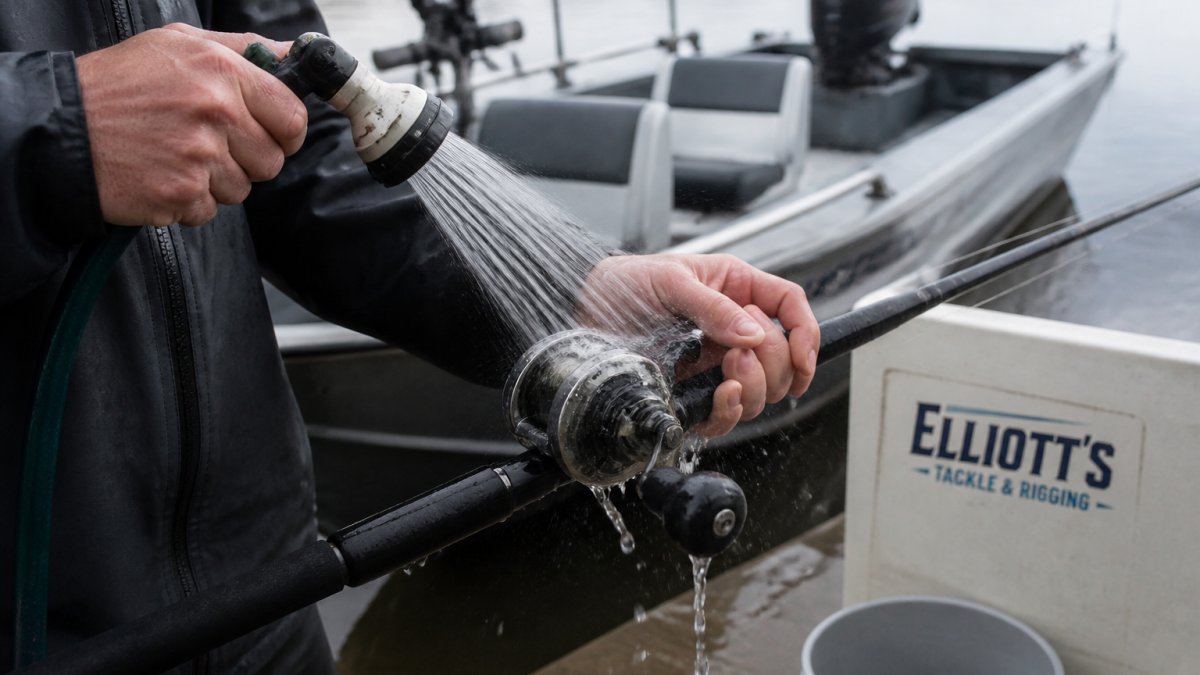
Rinse first, always. Fresh water dissolves and carries away salt before it can dry into a crust. Skip this and you're scrubbing salt crystals into your gear later, which scratches finishes and works grit into moving parts.
Pull everything out of the boat and lay it on a clean surface. Rinse in this order:
- Rods and guides
- Reels, wiped down but not dunked
- Downrigger cable and boom
- Flashers, spoons, and terminal tackle
- Rod holders and mounting hardware
Rinse Technique and Common Mistakes
Use low pressure. A hard spray drives water past seals and into reel bodies, which is the opposite of what you want. Let the water do the work and keep the nozzle close to the surface.
Watch out: never dunk a reel in a bucket of fresh water. Water intrusion into the gear case is far worse than a little surface salt, and it's the single most common way anglers ruin a good reel.
Rinse until the water runs clear and stops feeling slick. Salt leaves a film you can feel with your fingers. If it still feels slick, keep going.
Step 2: Learn How to Clean Fishing Gear After Saltwater Use
Cleaning is different from rinsing. Rinsing removes salt. Cleaning removes the dirt, debris, and dried fish slime that hold moisture against metal.
Mix a few drops of mild soap into fresh water. Dampen a washcloth and wipe down every surface. A soft brush gets into the tight spots around guides, reel feet, and handle threads.
For heavier grime on the boat itself, a stiff-bristle brush earns its keep around rod holders and gunwales.
Plano Hydro-Flo™ Stowaway® 3700 - Clear →
Rods, Guides, and Cork Grips
Wipe the rod blank from butt to tip. Pay attention to the rod guides, where salt builds up in the frame corners. A soft brush works around the ring without scratching it.
Cork grips need a different touch. Use a barely damp cloth, then dry immediately. Soaking cork breaks down the binder and it starts crumbling.
Here's the part most guides miss: check the rod feet where they seat in the reel. Salt hides under there and starts pitting the aluminum. Wipe that contact point dry every time.
Step 3: Saltwater Fishing Reel Maintenance and Drag Care
Reel maintenance is where saltwater does its worst damage. Salt works into the drag stack, the spool bearings, and the level wind, and it doesn't announce itself until the drag starts grabbing or the handle feels rough.
Start with the exterior. Wipe the frame, spool, and handle with a damp cloth, then dry. Back the drag off completely before storage so the drag washers don't compress and take a set.
Check the drag by pulling line off by hand. It should feel smooth and consistent through the full range. Any chatter, sticking, or sudden jump means the washers need attention.
Lubrication and Service Intervals
A light application of reel lubricant on the handle threads, level wind, and exposed moving parts keeps things smooth. Don't overdo it. Excess grease traps sand and salt. Use a marine-grade reel grease on gears and a lighter oil on bearings and the level wind; household oils and WD-40-style sprays attract grit and gum up over time.
- After every saltwater trip: rinse, wipe, back off the drag
- Monthly during the season: light lube on moving parts
- Once a season: full tear-down and re-grease for reels that see heavy use
- Before storage: back off drag, loosen the spool tension, and store with the reel off the rod if space allows
A common pattern among experienced trollers is to keep a dedicated service reel or two so a reel can go out for professional service without losing a trip. If you're not comfortable opening a reel, send it out. A seized bearing costs more than a service, and a drag that fails on a fish costs the fish.
When you do open a reel, keep the parts organized on a clean towel and work over a tray so small springs and washers don't vanish. Re-grease sparingly, and re-check drag smoothness before the next trip.
Step 4: Downrigger Maintenance on Boat-Mounted Gear
Downriggers take a beating that rods and reels don't. They sit in the spray all day, and the cable, clutch, boom, and mount collect salt with every drop.
Start with the cable.
Wipe the boom and base with a damp cloth and dry them. Check the mounting bolts for corrosion and snug them up.
If you run a manual unit, pull the spool cover and check for salt buildup around the drag. Keep an eye out for pitting on the mounting base and secure the unit during storage and transport.
Electric downriggers add a maintenance layer: check the power cord and plug for corrosion and clean the terminals.
The clutch and release deserve attention too. A release like the Scotty Power Grip Plus Stacker needs a freshwater rinse and a check that the pads still grip consistently.

A simple post-trip sequence keeps downriggers healthy: rinse cable and boom, wipe the base and mount, check bolts and electrical connections, back off the clutch, and hang the cable loosely to dry before the next trip.
Step 5: Trolling Flasher and Spoon Storage Done Right
Flashers and spoons are the easiest gear to neglect and the fastest to corrode. Salt left on a flasher pits the finish and dulls the action over time.
Plano Hydro-Flo™ Stowaway® 3700 - Clear →
Rinse each flasher and spoon in fresh water, then dry completely with a soft towel. Don't let them air dry in a pile. Water trapped between blades is where corrosion starts.
Store them separately. The Plano Hydro-Flo Stowaway 3700 lets moisture escape so lures dry naturally inside, and the clear lid means you can find what you want without digging.

For a trolling flasher that earns its space in the box, the Luhr-Jensen Money Roll Flasher runs down to 1 mph with a quick-start rotation.

Step 6: Dry Everything Thoroughly Before Storage
Drying is the step everyone rushes, and it's the one that decides whether you did any good. Trapped moisture causes more corrosion than salt alone.
Lay rods out or hang them so water drains from the guides. Stand reels so water runs off the housing. Hang downrigger cable loosely to air out. Spread flashers and spoons on a towel in open air.
Give everything time. A quick wipe and back in the box traps moisture against metal for days.
Store in a dry, ventilated space. A sealed bin with wet gear inside is a corrosion chamber. Leave lids off tackle trays until everything is bone dry.
Step 7: Inspect Your Salmon Trolling Gear Before Every Trip
Inspection takes five minutes and saves trips. Run through the whole setup before you leave the dock.
- Rod guides free of cracks, chips, and salt buildup
- Reel drag smooth through the full range
- Line free of nicks, flat spots, and fraying
- Hooks sharp and free of rust
- Downrigger cable intact with no kinks
- Release pads clean and gripping
- Rod holders secure and free of play
A cracked guide will shred braid in one pass. Rust on a hook costs you fish. These are cheap fixes at the dock and expensive problems on the water.
If your rod holder setup needs attention, replacing worn hardware is a straightforward job. A rear-mount rod holder is a simple add-on for downrigger setups.
| Gear | After Every Trip | Monthly | Seasonally |
|---|---|---|---|
| Rods and guides | Rinse, wipe, dry | Inspect guides | Check wraps and feet |
| Reels | Rinse, back off drag | Light lube | Full service |
| Downrigger | Rinse cable and boom | Check bolts | Replace cable if worn |
| Flashers and spoons | Rinse, dry, store separately | Check finishes | Replace worn swivels |
| Terminal tackle | Rinse, dry | Check hooks | Restock |
Saltwater punishes shortcuts, and salmon trolling gear takes more abuse than most setups because it's in the water and the spray all day.
Get started with Elliott's Tackle & Rigging and put gear on your boat that holds up trip after trip.
Frequently Asked Questions
How often should you rinse saltwater fishing reels?
Rinse reels with fresh water after every single saltwater trip, not weekly or monthly. Salt crystals start forming as soon as the water evaporates, and they work into drag washers, bearings, and level-wind mechanisms. A light freshwater spray with the drag tightened down takes under a minute. Avoid high-pressure spray directly into the reel body, since that pushes salt and water past seals. Wipe the exterior dry with a soft cloth afterward, then back the drag off before storage so the washers do not compress.
What should you inspect on salmon trolling gear before a trip?
Check rod guides for cracks or chips that will fray braid, and run a cotton swab inside each guide to catch burrs you cannot see. Look at the reel drag for smooth, even tension, and confirm the line has no nicks or flat spots from the last outing. Inspect downrigger cable for fraying or kinks, and test the release tension on your Scotty Power Grip Plus so it holds at your trolling speed. Check hook points and replace any terminal tackle that shows rust.
How do you prevent corrosion on fishing tackle?
Corrosion comes from salt left in contact with metal, so the order matters: rinse with fresh water, clean with mild soap where grime builds up, dry completely, then store dry. Never seal wet gear in a closed box or rod locker. Use a tackle tray with ventilation, like the Plano Hydro-Flo Stowaway 3700, so trapped moisture escapes instead of sitting against hooks and spoons. A light coat of reel lubricant on moving parts adds a barrier, but it does not replace rinsing.
How should you store salmon trolling rods and reels in the off-season?
Clean, rinse, and dry everything first, then store rods upright or horizontally in a rod rack rather than leaning them against a wall where guides can take pressure. Back the drag off completely so washers do not take a set. Store reels in a dry, temperature-stable space, not a damp garage floor. Flashers and spoons go into a ventilated tray with hooks protected. Before the next season, re-inspect guides, line, and downrigger cable, and re-lubricate reels before the first trip out.

0 comments