

Table of Contents
- Minn Kota Talon: What It Does and Who It's For
- Key Specs: Depth, Mounting, and Power Options
- Shallow Water Anchor Installation: Transom and Bracket Setup
- Minn Kota Talon vs Power Pole: Which Fits Your Boat?
- Shallow Water Anchor Maintenance Tips for Saltwater and Freshwater
- Rough Water and High-Current Performance
- Lighting, Accessories, and Console Integration
- Conclusion: Is the Minn Kota Talon Right for Your Rig?
- Frequently Asked Questions
Last Updated: October 3, 2026
Minn Kota Talon: What It Does and Who It's For
The Minn Kota Talon is a shallow water anchor that deploys a fiberglass spike straight down from your transom, holding your boat in two to eight feet of water without a trolling motor or traditional anchor.
The Talon suits anglers who fish shallow structure repeatedly, a shoreline, reef edge, or grass flat, where pinning your boat quietly matters. It's less useful for deep-water trolling or open-lake running.
How the Talon Stops Your Boat
A Talon drives a fiberglass anchor spike into the bottom using an electric motor and a toothed rack system. Press the button and the spike extends until it bites into sand, mud, or shell.
The spike does the holding, not the bracket. Once it's set, wave action and current push against the hull, and the spike resists that sideways load.
Three things make the system work:
- Deployment speed: the spike drops in seconds, so you can re-position fast
- Auto up/down modes: one-touch anchoring and retraction
- Quiet operation: no splash, no chain rattle, no spooking fish in skinny water
The result is fishing precision you can't get from a trolling motor alone.
Key Specs: Depth, Mounting, and Power Options
Talon models differ mainly in anchor length, which sets your maximum anchoring depth. Shorter units suit flats boats and skiffs; longer units reach deeper and handle bigger hulls.
Match your anchor length to the water you actually fish, not the deepest water you might fish once a year. A longer spike adds weight and cost, and on a small boat it can hang low enough to catch dock lines and trailer bunks.
| Consideration | What to Check | Why It Matters |
|---|---|---|
| Anchor length | Deeper water needs a longer spike | Sets your maximum anchoring depth |
| Transom space | Flat mounting surface, clear of trim tabs | Prevents bracket flex and interference |
| Hull clearance | Spike clears the hull when retracted | Avoids gelcoat and spike damage |
| Power supply | Dedicated circuit sized to the unit | Prevents voltage drop and slow deployment |
Choosing the Right Anchor Length
Pick the length that covers the deepest water you anchor in regularly, then add a little margin. Mostly fishing four to six feet? A mid-length unit is plenty. Chasing fish in eight to ten feet of tidal water? Size up.
The mistake we see most is buying for the deepest scenario and then fighting the extra length all season. A spike that's too long drags, catches cover, and makes trailering a hassle.
Shallow Water Anchor Installation: Transom and Bracket Setup
Shallow water anchor installation starts with the bracket, not the unit. The bracket carries every load the spike generates, so a solid, flat mounting surface on the transom is the foundation of the job.
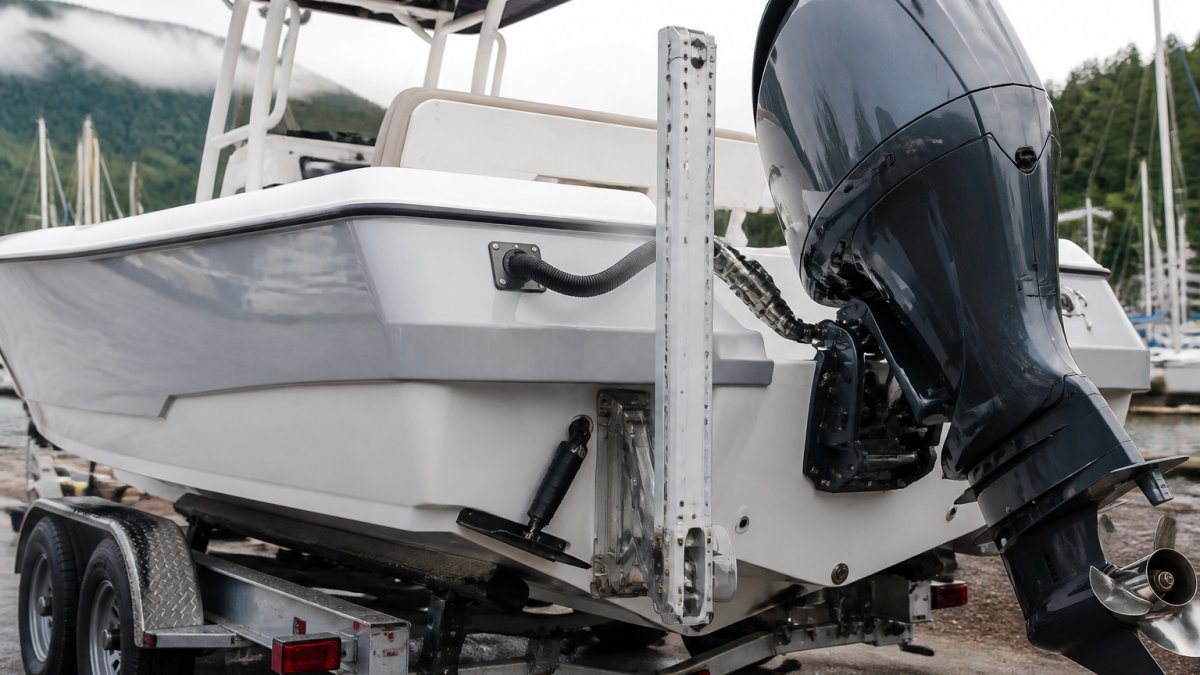
Before you drill, check three things: transom thickness, clearance for the retracted spike, and access to the back of the mounting area.
Work through the job in this order:
- Confirm the mounting location clears trim tabs, transducers, and swim platforms
- Verify the spike retracts fully without contacting the hull
- Add backing plates or a reinforced mounting pad
- Seal every fastener hole with marine sealant
- Run a dedicated power circuit with an inline fuse
- Test full deployment and retraction before you launch
What You'll Need: the Talon unit and bracket, stainless fasteners, backing plates, marine sealant, a fused power circuit, and basic hand tools.
The real-world challenge is hull shape. Curved or stepped transoms rarely give a flat surface, so you may need a spacer or adapter to keep the bracket square. If the bracket sits at an angle, the spike binds on the way down.
Minn Kota Talon vs Power Pole: Which Fits Your Boat?
The Minn Kota Talon vs Power Pole decision comes down to three things: how the anchor deploys, how much transom real estate you have, and what hull you're mounting to.
SeeLite Power Anchor Lighting Kit →
How each one deploys
The Talon drives a fiberglass spike straight down through a toothed rack and electric motor. The spike travels vertically, so the unit's footprint stays tight against the transom and never swings past the hull.
That arc matters. On a boat with twin outboards, a jack plate, or a crowded stern, the Talon's vertical travel is easier to fit because nothing sweeps sideways.
Transom space and mounting
| Factor | Minn Kota Talon | Power Pole |
|---|---|---|
| Deployment path | Straight down, vertical spike | Folding hydraulic arm, arcing travel |
| Transom footprint | Compact, hugs the transom | Larger, needs room for the arm to swing |
| Best fit | Twin outboards, crowded sterns, stepped transoms with an adapter | Hulls with open stern space and flat mounting pads |
| Operation | Electric motor and rack | Hydraulic pump and fluid |
| Typical add-on | Anchor lighting, foot switch | Anchor lighting, hydraulic accessories |
On a stepped or curved transom, the Talon usually needs a spacer or adapter to keep the bracket square so the spike doesn't bind.

Which one to pick
Pick the Talon for a compact footprint, simple electric operation, fast vertical deployment, and a stern already crowded with outboards, transducers, or trim tabs.
Shallow Water Anchor Maintenance Tips for Saltwater and Freshwater
Shallow water anchor maintenance tips matter most in saltwater, where corrosion attacks everything it touches.
The routine
Rinse the unit with fresh water after every saltwater trip. Salt left on the spike, bracket, and hardware eats into fasteners and electrical connections.
- After every saltwater trip: fresh-water rinse of the spike, bracket, and hardware
- Monthly: inspect fasteners for corrosion and re-torque as needed
- Seasonally: clean and protect electrical connections with a dielectric grease
- Annually: check the spike for cracks or bends, inspect the rack for grit, and replace worn parts
For freshwater anglers, the routine is lighter but not optional. Mud and grit work into the rack over time and slow deployment.
Cleaning the spike and rack
Sand, mud, and shell grit are the enemy of the toothed rack.
Replacing a worn or bent spike
A fiberglass spike takes a beating on shell, rock, and hard-packed sand.
Common error codes and what they mean
Most Talon faults trace back to power or a bound spike, not a failed motor. When the unit beeps or refuses to deploy, work through this order:
SeeLite Power Anchor Lighting Kit →
- No response to the button: check the inline fuse and the dedicated circuit first. A blown fuse or a loose ground is the most common cause.
- Slow or stalled deployment: look for grit in the rack or a bent spike. Clean the rack, inspect the spike, and retest.
- Intermittent operation: voltage drop from an undersized circuit or a corroded connection. Re-terminate the connections and confirm the circuit is sized to the unit.
- Unit runs but won't hold: the spike isn't biting. Check that you're over a bottom the spike can penetrate and that the bracket isn't flexing.
If it still faults after you've confirmed clean power and a free-traveling spike, call for service rather than keep cycling it.
Winterizing and storage
Before storage, rinse the unit, retract the spike fully, disconnect the power, and coat the electrical connections. Store the boat with the spike retracted so the rack isn't under load all winter.
Rough Water and High-Current Performance
Rough water and high-current performance is where shallow water anchors separate. A Talon holds well in calm, protected water, but in strong current or heavy chop the load on the spike and bracket climbs fast.
In high-current conditions, angle your boat so the spike takes the load along its strongest axis, and avoid anchoring broadside to a fast current. If the boat starts to swing hard, retract and reposition rather than fighting it. The spike is built to hold, not to anchor a boat in a tidal rip.
Current changes with tide and wind, so a spot that holds at slack water may not hold two hours later. Plan to re-anchor as conditions shift instead of assuming one set lasts all day.
Lighting, Accessories, and Console Integration
Lighting and accessories turn a functional Talon into a boat that works the way you fish. The most popular add-on is anchor lighting, which makes your boat visible at early launches and evening runs.
The SeeLite Power Anchor Lighting Kit is a pair of 44-inch LED strips that mount directly to shallow water anchors, with a built-in coiled connector wire so the lights move as the poles raise and lower.
Console integration is the other upgrade worth planning for. Wiring your Talon to a foot switch or console control lets you deploy and retract without leaving the wheel, a real advantage when positioning on fish in current, and a foot switch keeps both hands free for a rod.
When you add accessories, run them on their own fused circuits. Sharing a circuit with your electronics invites voltage drop and intermittent faults.
Conclusion: Is the Minn Kota Talon Right for Your Rig?
The Minn Kota Talon earns its place on boats that fish shallow structure often. If you work flats, shorelines, and reef edges and you're tired of drifting off your spot, a Talon is one of the most useful upgrades you can bolt to a transom. If you mostly fish deep or troll open water, spend the money elsewhere.
Match the anchor length to your real water, mount the bracket with proper backing, and rinse it after every saltwater trip. Do those three things and a Talon will hold your boat for years.
At Elliott's Tackle & Rigging, every shallow water anchor and accessory we stock is hand-selected by a captain with forty years on the water, so you're not guessing about what holds up. We carry the gear we'd run on our own boats, with free shipping and 30-day returns.
Frequently Asked Questions
Which is better, Power Pole or Minn Kota Talon?
It depends on your hull and fishing style. The Minn Kota Talon uses a fiberglass anchor spike and electric drive with no hydraulics, so there's no fluid to leak or pump to service. Power Pole uses a hydraulic system, which some anglers prefer for gradual soft-bottom stops. Talon's all-electric design means simpler wiring and fewer moving parts. If you fish rocky or hard-bottom areas or want minimal maintenance, the Talon is often the better fit.
What maintenance does a Minn Kota Talon need to stay operational?
Rinse the anchor spike and housing with fresh water after every saltwater trip to prevent corrosion. Check the mounting bracket bolts each season for tightness, and inspect the spike for nicks or fiberglass damage. Keep the power connections clean and dielectric-greased. If you have the SeeLite Power Anchor Lighting Kit installed, check the coiled connector wire for wear. A few minutes after each trip prevents most problems.
Does the Minn Kota Talon integrate with existing marine electronics?
Yes. The Talon supports wireless remote control and can integrate with select fish finders and GPS units for on-screen deployment. A foot switch is also available for hands-free operation while you're fighting a fish. If you're running a modern sonar or chartplotter network, check compatibility with your specific head unit before buying, since integration features vary by model year.
Can I install a Minn Kota Talon on any boat transom?
Most boats with a standard transom can accept a Talon, but you need adequate hull clearance and a flat mounting surface. Jack plates and some stepped transoms require a specific adapter bracket. Measure your transom height and check that the anchor won't interfere with your outboard's steering or tilt range. If your rig is custom, verify bracket fitment before drilling.
0 comments