

Table of Contents
- Start With the Water: Reading Conditions Before You Pick a Flasher
- Salmon Flasher Colors: Match the Finish to the Conditions
- Salmon Flasher Size: Matching Blade Size to Species and Speed
- Traditional Flashers vs. a 360 Flasher for Salmon
- How to Rig a Salmon Flasher: Leader Length, Lures, and Hoochie Setups
- Trolling Depth, Weight, and Rod Placement
- Troubleshooting a Flasher That Isn't Producing
- Frequently Asked Questions
Last Updated: October 19, 2026
Start With the Water: Reading Conditions Before You Pick a Flasher
Most anglers buy a salmon trolling flasher because it looked good in the tackle shop. That is the wrong order.
A salmon trolling flasher is a rotating metal or plastic attractor that spins ahead of your lure or hoochie, throwing flash and vibration to pull salmon toward your gear.
At Elliott's Tackle & Rigging, we have watched captains swap flashers three times in an hour while the guy in the next boat kept the same one down and kept hooking up.
Water Clarity, Light, and Depth
Three things decide your starting flasher: how clear the water is, how much light is getting down, and how deep you plan to fish. Here is how we break it down:
- Clear water, bright sun: go smaller and more natural. Fish can see the hardware and get shy.
- Stained or green water: brighter finishes and UV help the flasher stand out.
- Deep or low-light: glow finishes earn their keep.
- Flat calm, high sky: fish spook easier. Downsize and slow down.
The rule we fish by: the murkier the water, the louder the flasher.
Salmon Flasher Colors: Match the Finish to the Conditions
Color is the question we get asked most, and the honest answer is that color follows conditions, not fashion. Bright light and clear water call for natural finishes. Dark water and deep lines call for flash and glow. But the fastest way to pick a color is to run a short decision tree instead of staring at a wall of flashers.
A Practical Color Decision Tree
Work through these four questions in order. Stop at the first one that clearly applies and start there.
- How clear is the water? If you can see your flasher down past about 8 feet, the water is clear. If it disappears before 4 feet, it is stained or dirty.
- How much light is getting down? Bright sun, flat calm, and high sky mean fish are spooky. Overcast, chop, and deep lines mean you can run louder hardware.
- What species are you targeting? Coho and pressured kings respond to natural and dark finishes. Big adult kings in deep water respond to bright and glow finishes.
- What is the bait doing? If bait is thick and small, match the hatch with pearl and silver. If bait is scattered, go brighter to draw fish in.
Here is how that tree plays out in practice:
- Clear water, bright sun, pressured fish: start with a dark or natural flasher. Black, dark green, pearl white, or a baitfish pattern. Let your hoochie do the color work.
- Stained or green water, overcast: start with a bright or UV flasher. Chrome, blue, glow, or a UV finish. The flasher needs to stand out because the fish cannot see it as well.
- Deep water, low light, or dirty water: start with a glow flasher. Glow finishes keep working when the sun drops and the water is thick.
- Mixed conditions: start natural and adjust one variable at a time. Pearl white is the most underrated flasher color in the box because it reads as baitfish belly flash and rarely spooks a wary fish.
Bright, Dark, and Natural-Finish Colors
Think of it in three buckets:
- Bright and UV: chrome, blue, glow. Best in stained water, deep water, or overcast days.
- Dark: black, dark green, dark purple. Best in bright sun and clear water where fish are pressured.
- Natural: pearl white, silver, baitfish patterns. A safe starting point almost anywhere.
Our pick for stained water and low light is the Luhr-Jensen Money Roll Flasher in Blue Kamikaze UV. The UV Bright finish throws more reflected light, and the Everglo glow keeps working when the sun drops. For clear water and bright sun, the 8-1/4 inch Money Roll Flasher in Chrome Ladder is a natural starting point that still flashes without spooking pressured fish.


Salmon Flasher Size: Matching Blade Size to Species and Speed
Size is where a lot of setups go wrong. Big flashers move big fish, but they also add drag and can kill a slow presentation. Match blade size to the species you are chasing, the speed you plan to troll, and the water you are fishing.
Luhr-Jensen Money Roll Flasher - 11" - Blue Kamikaze UV →
Here is how we sort it:
| Flasher Size | Best For | Trolling Speed | Typical Use |
|---|---|---|---|
| 8-1/4 inch | Coho, smaller kings, pressured fish | 1-2 mph | Finesse, clear water |
| 11 inch | Adult kings, deep lines | 1.5-2.5 mph | Standard salmon trolling |
Species and Regional Size Guide
The same size does not fit every fishery. Use this breakdown to narrow your starting point before you tie anything on.
- Coho: 8-1/4 inch is usually enough. Coho are aggressive but not huge, and a smaller flasher keeps the presentation lively at slower speeds. In clear water, downsize and lengthen the leader.
- Chinook (king) salmon: step up to 11 inch for adult kings, especially in deep water. Big kings respond to more flash and more thump. In pressured clear water, drop back to 8-1/4 inch and slow down.
- Chum and pink salmon: 8-1/4 inch works well in most cases. These fish are less leader-shy and respond to a steady, moderate-speed presentation.
- Pacific Northwest saltwater: 11 inch is the standard for deep, dark water and big tides. The extra surface area holds up in current and keeps flashing at trolling speed.
- Great Lakes: 8-1/4 inch is often the better starting point for pressured fish in clear water. Step up to 11 inch when fishing deep or in low light.
The 8-1/4 inch Money Roll Flasher in Chrome Ladder is our go-to when fish are finicky. It still thumps at speeds down to 1 mph, so you can slow down without losing action.
For deep, dark water and bigger kings, step up to the 11-inch Blue Kamikaze UV. More surface area, more flash, more draw.
Traditional Flashers vs. a 360 Flasher for Salmon
A 360 flasher for salmon spins in a full circle around its own axis. A traditional flasher swings in a wide arc off to one side. That single difference changes everything downstream: pull, leader behavior, and how the lure swims.
- Traditional flasher: wider side-to-side swing, more lateral pull, great for standard trolling spreads.
- 360 flasher: tighter spin, less side load, keeps the lure tracking straighter behind it.
- Traditional wins when you want a big, lazy roll and long leaders.
- 360 wins in heavy current, fast tides, or when you want the lure to run true.
If your flasher keeps fouling or your leader keeps wrapping, a 360 model often fixes it. If you want maximum side-to-side flash, stay traditional.
How to Rig a Salmon Flasher: Leader Length, Lures, and Hoochie Setups
Rigging is where good flashers go to die. Get the leader length and lure pairing right and the whole setup comes alive. Get it wrong and the flasher spins while the lure trails dead behind it.
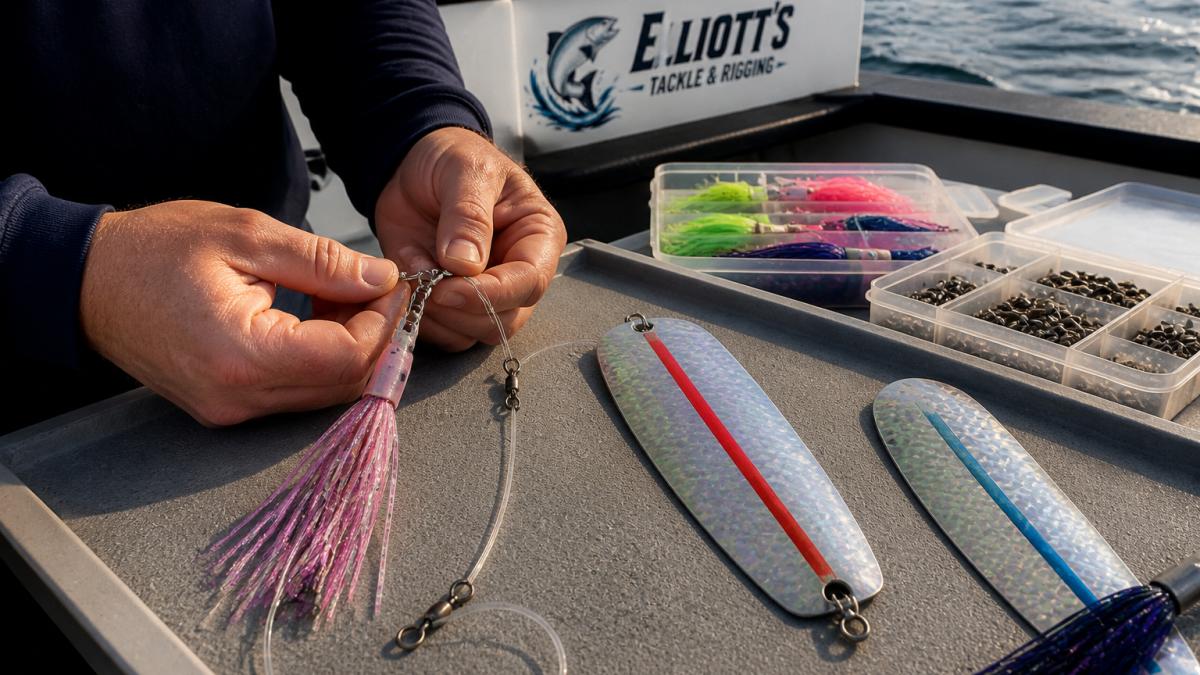
Here is our standard order of operations:
- Tie your mainline to the top swivel of the flasher.
- Run a leader from the back ring to your lure or hoochie.
- Add a plastic skirt or bait strip to the hoochie for extra action.
- Check that the flasher spins freely before it hits the water.
- Set your line-counter reel and note the number.
Leader Length and Trolling Speed
Leader length controls how much action reaches the lure. Short leaders give a tight, fast wiggle. Long leaders give a lazy roll.
- Short leaders (around 18-24 inches): fast action, great for hoochies and aggressive fish.
- Medium leaders (around 30-36 inches): the all-around choice for most trolling.
- Long leaders (40 inches and up): subtle action for pressured, clear-water fish.
Trolling speed and leader length work together. Run faster and the leader can be shorter. Slow down and you may want a longer leader to keep the lure lively.
Luhr-Jensen Money Roll Flasher - 11" - Blue Kamikaze UV →
Trolling Depth, Weight, and Rod Placement
Depth is a math problem, not a guess. The deeper you fish, the more weight you need to hold the flasher down, and the more careful you have to be about rod placement so lines do not cross.
Weight and depth basics:
- Shallow (top 20 feet): light weight or none, longer setback behind the boat.
- Mid column: add weight to hold depth at your target speed.
- Deep: heavier weight plus a downrigger keeps the flasher in the strike zone.
Rod placement matters just as much. Run your front rods high and your back rods low so the deep lines clear the shallow ones on turns.
Troubleshooting a Flasher That Isn't Producing
A flasher that will not produce is usually telling you something. Work through this checklist before you blame the fish.
- Check the spin. Pull the rig alongside the boat. If the flasher is not rotating, your speed is off or the swivels are fouled.
- Check the leader. A twisted or kinked leader kills lure action. Retie it.
- Check the speed. Too fast and the flasher blows out. Too slow and it stalls. Find the speed where it thumps.
- Check the depth. If you are marking fish above or below your gear, move the gear.
- Check the color and size. Bright day and clear water? Downsize and go natural. Dark water? Go loud.
Nine times out of ten, the fix is speed or leader length. Change one variable at a time so you actually learn what worked.
The 8-1/4 inch Nuclear Carbon Glow Money Roll is a strong troubleshooting swap when the bite goes quiet in deep or low-light water.

Frequently Asked Questions
What size flasher should I use for salmon?
Size depends on the species and conditions. Larger 11-inch flashers like the Luhr-Jensen Money Roll Flasher in Blue Kamikaze UV ($23.99) push more water and suit bigger fish and faster trolls, while 8-1/4-inch models such as the Nuclear Carbon Glow ($17.99) are easier for smaller fish to commit to and work well in calmer water. Start with the larger blade when you need maximum attraction and drop down a size when fish are shy or the water is clear.
What color flasher works best for salmon?
There's no single best color. Match the finish to light and water clarity: bright UV and glow finishes such as Blue Kamikaze UV hold up in deep or stained water, while chrome and natural patterns read better in clear, bright conditions. The Chrome Ladder Money Roll Flasher ($17.99) is a solid clear-water choice. Carry a few finishes and let the conditions tell you which one the fish want that day.
How does a 360-degree flasher differ from a traditional flasher?
A traditional flasher swings in a wide arc and pulls the lure through a side-to-side path, while a 360-degree flasher spins in a full rotation and creates a tighter, more constant flash. Traditional models are the standard for most trolling, but a 360 flasher for salmon can add a different look when fish have seen the same action all day. Try one on a back rod and compare strikes before committing.
How far behind the flasher should I run my salmon lure?
Leader length controls how much action reaches the lure. A shorter leader gives the lure more of the flasher's kick, and a longer leader lets it swim more freely. Start around two to three times the flasher length and adjust from there: shorten it when fish want speed and flash, lengthen it when they're spooky in clear water. Keep a line-counter reel handy so you can repeat a length that starts producing.
0 comments