

Table of Contents
- What Are Cisco Fishing Systems?
- Track-Mounted Rod Holders: The Foundation of Cisco Systems
- Cisco Fishing Systems Product Lineup
- Building Your Trolling Gear Setup with Cisco Systems
- Maintenance and Longevity: Keeping Your Cisco Systems in Top Condition
- Cisco Systems Compatibility and Boat Integration
- Why Anglers Choose Cisco Fishing Systems
- Conclusion
Last Updated: August 3, 2026
What Are Cisco Fishing Systems?
Cisco Fishing Systems represent a complete approach to organizing your trolling arsenal on the water. At Elliott's Tackle & Rigging, we've worked with serious Pacific Northwest anglers for decades, and we know that having the right mounting infrastructure changes everything about your fishing day. These systems combine track-mounted rod holders, adjustable components, and marine-grade hardware into a unified platform that lets you deploy multiple lines with confidence and precision.
The foundation of Cisco Fishing Systems is modular flexibility. Instead of being locked into a single configuration, you can reposition rod holders, add downrigger mounts, or expand your setup as your fishing style evolves. Whether you're targeting king salmon in the Puget Sound or working halibut deeper offshore, Cisco systems adapt to your boat and your technique without requiring permanent modifications.
Every component is designed for saltwater durability and real-world fishing conditions. The anodized aluminum resists corrosion, the mounting hardware uses stainless steel fasteners, and the adjustable angles let you dial in the precise rod position for your specific trolling spread.
Track-Mounted Rod Holders: The Foundation of Cisco Systems
Track-mounted rod holders form the backbone of any Cisco system you build. Unlike fixed holders bolted permanently to your gunnel, track-mounted systems give you the freedom to adjust spacing, angle, and positioning based on your current fishing strategy.
Anodized Aluminum Construction and Corrosion Resistance
The anodized aluminum used in Cisco rod holders is a specific engineering choice that directly impacts longevity. Anodizing creates a protective oxide layer on the aluminum surface that resists salt spray, UV exposure, and constant moisture. Unlike bare aluminum, which oxidizes into chalky white residue, anodized aluminum maintains its structural integrity year after year.
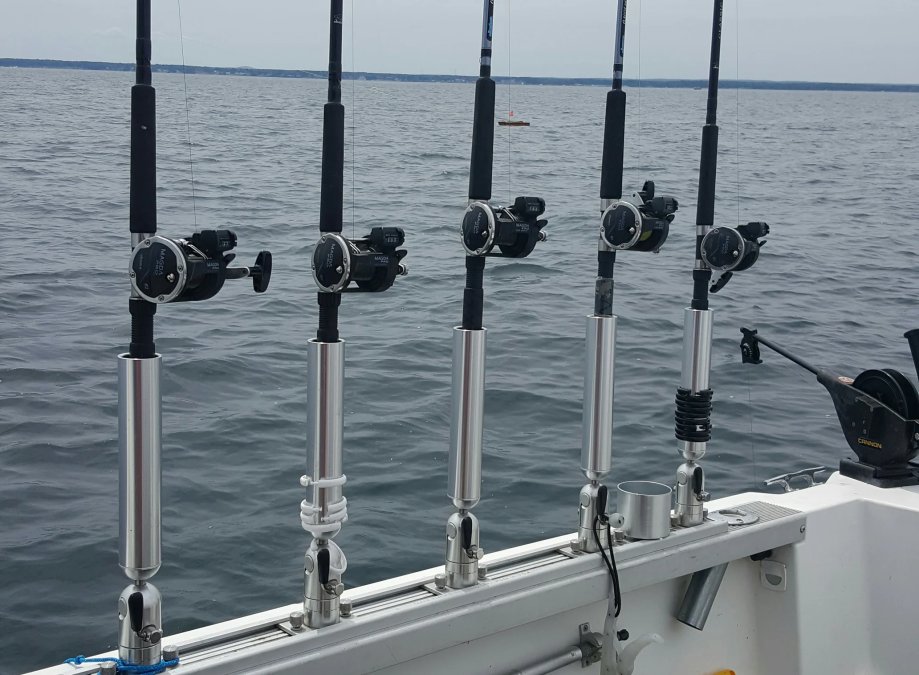
Close-up of anodized aluminum rod holder mounted on a boat gunnel with visible corrosion-resistant finish
This corrosion resistance translates directly into lower maintenance and longer equipment life. You're not replacing rod holders every two seasons or dealing with seized adjustment mechanisms. When you're fighting a 30-pound halibut and need your rod holder to lock solid without slipping, that material choice matters.
Adjustable Angles and Customizable Configurations
Adjustable angles on Cisco rod holders let you optimize your trolling spread for different target species and water conditions. King salmon often respond better to baits and lures presented at specific angles relative to the boat. Being able to adjust your rod positions without removing and reinstalling hardware saves time and gives you tactical flexibility on the water.
The adjustment mechanism on Cisco systems uses heavy-duty torque resistance to keep your rods locked in place once you've dialed in the angle. This isn't a friction fit that slowly creeps downward as waves rock the boat. The locking collar uses mechanical advantage to clamp the rod holder tube at whatever angle you choose, and it stays there.
Customizable configurations mean you can run different spreads depending on what you're fishing for. A typical multi-line setup might have rods at 45, 60, and 75 degrees to create separation and reduce line tangles. Cisco systems let you make these adjustments in minutes rather than hours.
Cisco Fishing Systems Product Lineup
The Cisco lineup at Elliott's Tackle & Rigging includes purpose-built solutions for different fishing scenarios. Rather than forcing yourself into a one-size-fits-all approach, you can select components that match your boat size, target species, and fishing style.
Quad Tube Rod Holder for Multi-Line Spreads
The Cisco Quad Tube Rod Holder puts four independent rod positions on a single mount, giving serious anglers a complete multi-line spread without crowding your boat's deck. Each tube rotates independently, so you can adjust angle and position for each rod separately. This matters because you're not limited to a single angle for all four rods.

Cisco Fishing Systems Quad Tube Rod Holder
The quad tube design reduces the number of mounting points you need on your boat. Instead of installing four separate single-rod holders along your gunnel, you get four rods from one compact assembly. This simplifies your boat layout and makes deck organization cleaner, which matters when you're managing multiple lines and trying to avoid tangles.
Each tube in the quad holder accepts standard rod and reel combinations. The rotating feature lets you quickly adjust rod position without removing the rod from the boat, which is critical when you're actively fishing and need to respond to strikes.
Tree Mast with Adjustable Rod Holders
The Cisco Tree Mast with 3 Adjustable Rod Holders mounts three rod holders on a single indexable mast. The mast itself can rotate and lock at different positions, letting you adjust the entire spread rather than just individual rod angles. This design works particularly well on boats where deck space is limited.
The tree mast configuration gives you three independently adjustable rod holders that can be positioned at different heights. This vertical separation helps reduce line tangles and lets you work different water columns simultaneously. The locking mast feature is engineered for precision and won't drift or shift even under the stress of fighting multiple fish.
Sure-Stop Track System for Flexible Mounting
The Cisco Sure-Stop Track System provides the mounting rail infrastructure that lets you reposition any Cisco track-mount accessory anywhere along your boat's gunnel. This system gives you maximum flexibility because you're not locked into a single configuration.

Cisco Fishing Systems Sure-Stop Track System
The track itself is precision-machined to ensure smooth movement and positive locking. Accessories slide along the track and lock with a mechanical stop that prevents drift. This design lets you experiment with different rod spacing and positioning to find what works best for your boat and your fishing.
Building Your Trolling Gear Setup with Cisco Systems
Assembling a complete trolling setup with Cisco systems requires thinking about boat layout, line separation, and equipment compatibility. The physical arrangement of your rods and accessories directly impacts your ability to manage multiple lines and respond to strikes.
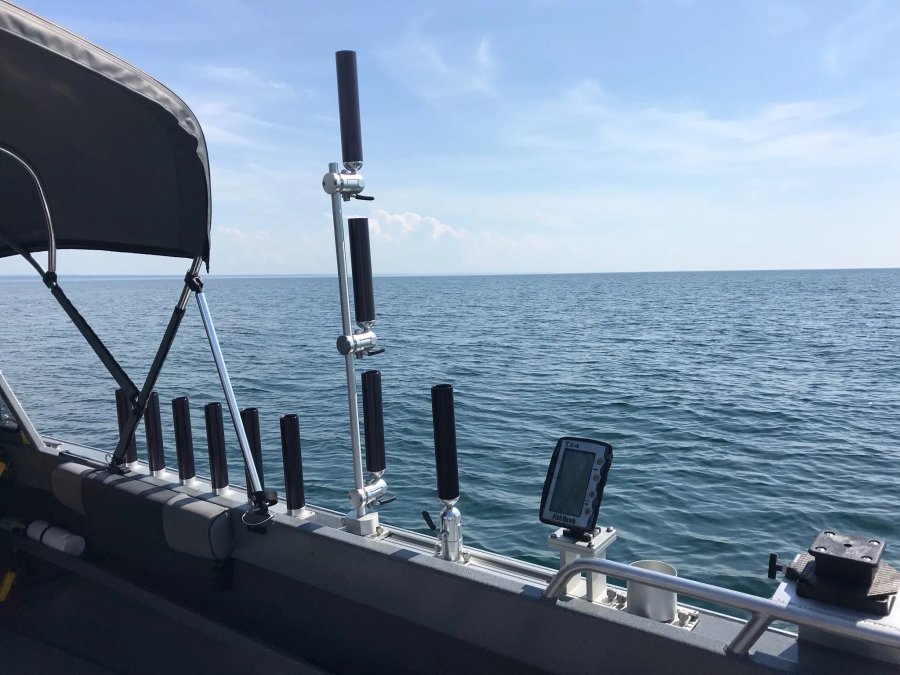
Angler setting up multiple rod holders on a boat gunnel with Cisco track systems installed, saltwater fishing environment with snow-capped mountains visible in the background
Gunnel Mounting and Boat Hardware Integration
Gunnel mounting is the most common installation point for Cisco systems because it gives you stable, accessible rod positioning. The gunnel, the upper edge of your boat's hull, provides a strong structural point and keeps your rods positioned for easy management. Most saltwater fishing boats have gunnels designed to accept mounting hardware, and Cisco systems are engineered to integrate cleanly with standard boat construction.
The mounting hardware itself uses stainless steel fasteners and corrosion-resistant backing plates. This prevents the hardware from corroding into the gunnel or becoming impossible to remove later. Cisco systems work with standard marine hardware specifications, so installation is straightforward on most modern boats.
Downrigger Mounts and Multi-Rod Configuration
Downriggers extend your trolling capability by letting you fish at precise depths with weighted cables. Cisco systems accommodate downrigger mounts alongside rod holders, letting you build a complete deep-water trolling spread. The track system lets you position downriggers where they won't interfere with rod holders.
A typical downrigger setup combines a mounted downrigger unit with dedicated rod holders for the downrigger rod and your other trolling lines. The multi-rod configuration becomes more manageable when you have dedicated mounting points for each line. This separation reduces tangles, makes it easier to identify which rod has a strike, and keeps your deck organized during active fishing.
Maintenance and Longevity: Keeping Your Cisco Systems in Top Condition
Cisco systems are built for durability, but they still require basic maintenance to perform reliably for years. Saltwater exposure is relentless, and preventive care extends equipment life dramatically.
Saltwater Maintenance Best Practices
Rinsing your Cisco components with fresh water after every saltwater fishing trip is the single most important maintenance step. Salt crystals left on anodized aluminum and stainless steel fasteners accelerate corrosion. A simple fresh-water rinse removes salt deposits before they can cause damage. This takes five minutes and extends equipment life by years.
Pay particular attention to moving parts and adjustment mechanisms. The rotating tubes on rod holders and the locking collars on track systems benefit from a fresh-water rinse to remove salt spray. If you notice any stiffness in adjustment mechanisms, a fresh-water rinse often restores smooth operation.
Inspect fasteners regularly for signs of corrosion. If you notice any discoloration on fasteners, clean them with a soft brush and fresh water. If corrosion has progressed to the point where fasteners are difficult to turn, apply a light penetrating oil and let it sit for a few minutes before attempting to loosen them.
Structural Integrity and Torque Resistance Over Time
The locking mechanisms on Cisco systems use mechanical advantage to maintain torque resistance indefinitely. Unlike friction-based designs that gradually wear and loosen, Cisco's locking collars use positive engagement that doesn't degrade with use. Periodically verify that your rod holders are still locked securely with a simple tug test.
If you notice that a rod holder is no longer locking as firmly as it should, the issue is usually salt crystal buildup in the locking mechanism rather than wear. A fresh-water rinse and a light application of marine grease typically restores full locking force. Avoid heavy oils or greases that attract dirt and salt; marine-grade lubricants are formulated for saltwater environments.
The anodized aluminum components maintain structural integrity indefinitely if they're kept clean. Scratches or dings expose bare aluminum, which will oxidize, but this is cosmetic rather than structural.
Cisco Systems Compatibility and Boat Integration
Cisco systems are designed with universal compatibility in mind, but understanding your boat's specific mounting points and hardware requirements ensures a smooth installation.
Lund Boat Mounting Solutions and Universal Track Compatibility
Lund boats are particularly well-suited for Cisco system installations because their gunnels are designed to accept standard marine hardware. The aluminum construction and reinforced mounting points make Lund boats ideal platforms for track systems and rod holder installations.
Universal track compatibility means Cisco components work with standard marine mounting tracks used across the industry. The Sure-Stop Track System accepts any Cisco track-mount accessory, and the track itself uses industry-standard dimensions. Before installation, verify your boat's gunnel thickness and material composition. If you're uncertain about your boat's compatibility, contact Elliott's Tackle & Rigging for guidance.
Why Anglers Choose Cisco Fishing Systems
Serious Pacific Northwest anglers choose Cisco systems because they solve real problems that come up on the water. The modular approach means you're not buying a fixed solution that works for one fishing style. You're investing in an infrastructure that adapts as your skills develop and your fishing priorities change.
The engineering quality is evident in the details. Precision-machined components, anodized aluminum construction, stainless steel fasteners, and heavy-duty locking mechanisms all work together to create equipment that functions reliably in harsh saltwater conditions.
The Cisco (2) 24” Track & (4) Track Mount Rod Holder Bundle from Elliott's Tackle & Rigging gives you a complete starting point for building a multi-line trolling setup. This is the system that Elliott's Tackle & Rigging team recommends for anglers moving from simple single-rod fishing to organized multi-line trolling.
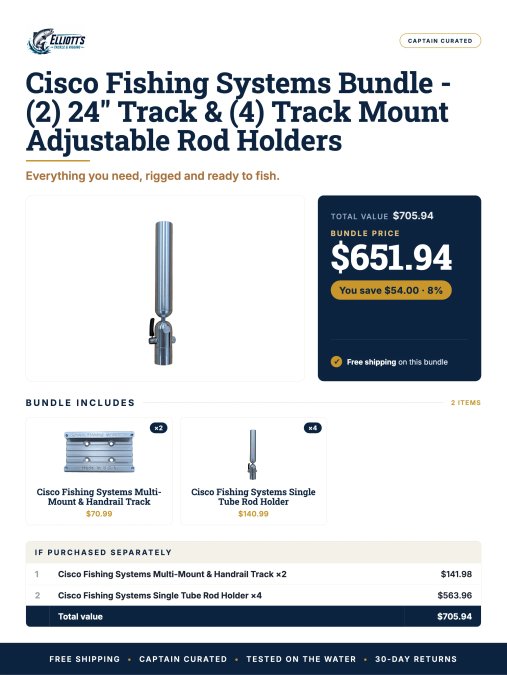
Cisco Fishing Systems (2) 24” Track & (4) Track Mount Rod Holder Bundle - Standard Silver Finish
The flexibility of Cisco systems means you're not locked into a single configuration. As you fish more and learn what works for your boat and your target species, you can adjust rod positions, add downrigger mounts, or expand your setup.
Building a trolling setup that works reliably requires equipment engineered for saltwater conditions and designed for the flexibility you'll need on the water. Elliott's Tackle & Rigging has curated Cisco Fishing Systems because they deliver the durability, adjustability, and precision that serious anglers demand. The anodized aluminum construction resists corrosion, the modular track system lets you customize your spread, and the heavy-duty locking mechanisms keep your rods positioned exactly where you want them. Start with the Cisco track and rod holder bundle, and build from there as your fishing demands evolve.
Component |
Best For |
Key Feature |
|---|---|---|
Quad Tube Rod Holder |
Full multi-line spreads |
Four independent rotating tubes |
Tree Mast |
Compact deck layouts |
Three adjustable holders on single mast |
Sure-Stop Track System |
Flexible repositioning |
Slide-and-lock mounting rail |
Track & Rod Holder Bundle |
Getting started |
Complete foundation system |
Frequently Asked Questions
Are Cisco Fishing Systems worth the investment for saltwater trolling?
Cisco Fishing Systems deliver precision-engineered components built specifically for saltwater conditions. The anodized aluminum construction resists corrosion, adjustable angles let you dial in your exact trolling spread, and the heavy-duty torque resistance handles the demands of multi-rod setups. Serious anglers value the durability and customization options, especially when running multiple lines across varying depths.
How do you mount Cisco track-mounted rod holders to your boat?
Cisco systems use the Sure-Stop Track System as the foundation. Install the track along your boat's gunnel using the provided mounting hardware. Once the track is secured, any Cisco rod holder slides into position and locks in place. The track allows you to reposition holders anywhere along the rail, giving you flexibility to adjust your trolling spread without permanent installation.
Can Cisco Fishing Systems work with Lund boat tracks?
Cisco systems are engineered for universal track compatibility, including standard Lund boat mounting systems. The Sure-Stop Track System works with most modern boat track configurations. Before purchasing, verify your boat's track profile matches Cisco's specifications. Elliott's Tackle & Rigging can help confirm compatibility with your specific boat model.
What is the difference between Cisco's Quad Tube Rod Holder and Tree Mast system?
The Quad Tube Rod Holder mounts four rods in a compact footprint with individual rotating tubes, ideal for anglers who want maximum rod capacity without crowding the deck. The Tree Mast puts three independently adjustable rod holders on a single indexable mast, letting you dial in precise angles and spacing. Choose Quad Tube for full spreads; choose Tree Mast for precise angle control and spacing flexibility.
0 comments