

Table of Contents
- Top Marine Electronics Picks for 2026
- Essential Marine Electronics for Saltwater Anglers
- Saltwater Fish Finders 2026: What's New
- Marine Electronics Installation: Getting Started
- Marine Electronics Maintenance and Firmware Updates
- Garmin Marine Electronics 2026: Top Models
- Budget-Specific Tiering and Interoperability
- Conclusion
Best Saltwater Marine Electronics for 2026: A Buyer's Guide
Last Updated: July 27, 2026
Serious saltwater anglers know that having the right equipment can mean the difference between a successful day on the water and heading back to the dock empty-handed. At Elliott's Tackle & Rigging, we've spent forty years helping captains and anglers find the best saltwater marine electronics for 2026 that actually perform when conditions get rough. Integration between devices, mobile apps, and cloud systems has become seamless, making it easier than ever to build a cohesive electronics ecosystem.
The real challenge is finding the right combination for your specific boat, fishing style, and budget without overspending on features you'll never use or buying gear that doesn't integrate with what you already have on board.
Below, we'll walk you through the top marine electronics picks for 2026, explain the core technologies that matter, cover installation and maintenance, and help you navigate interoperability challenges that catch most buyers off guard.
Top Marine Electronics Picks for 2026
Premium Multifunction Displays
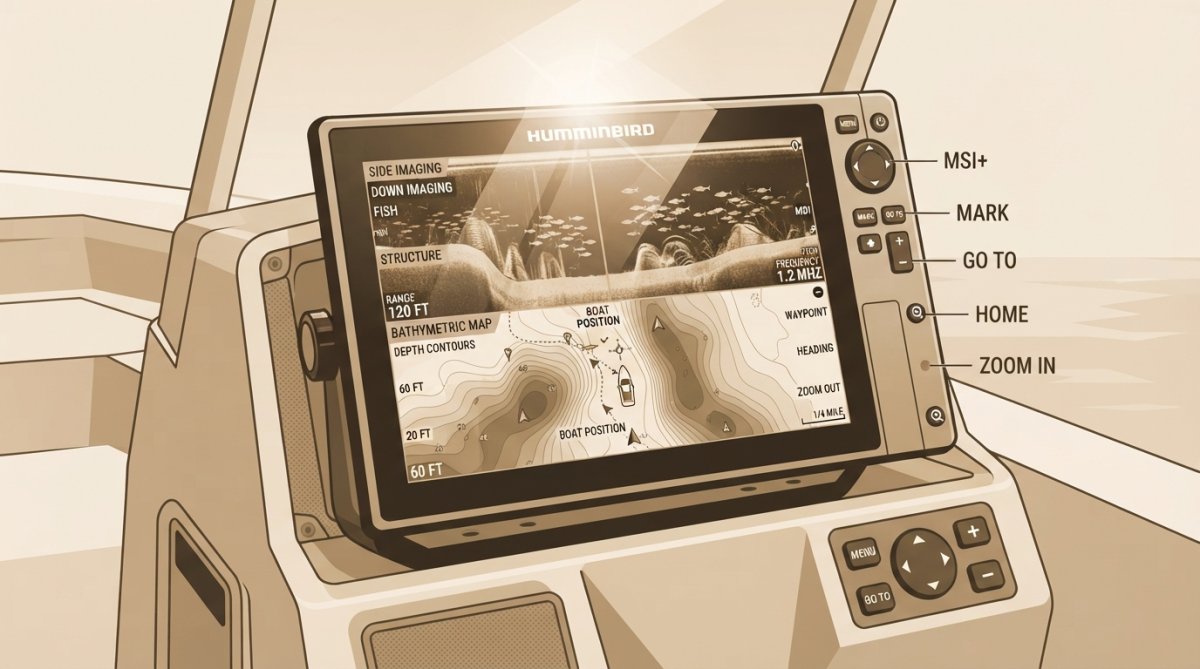
The Humminbird APEX 16 VX MSI+ stands out as the flagship choice for serious offshore anglers. This 15.6-inch Full-HD touchscreen combines MEGA Imaging+ and Dual Spectrum CHIRP sonar technology, delivering exceptional underwater clarity that helps you locate structure and fish with precision. The system supports NMEA 2000 networking, HDMI connectivity, and wireless integration with mobile devices. The MEGA Side Imaging and Down Imaging+ capabilities produce images so clear that experienced anglers can distinguish individual fish from suspended debris. For tournament anglers and charter captains, the investment pays for itself through improved catch rates and navigation efficiency.
The Garmin GPSMAP 8616xsv represents the premium navigation option. This 16-inch Full HD IPS touchscreen delivers exceptional clarity in direct sunlight, with built-in dual-channel 1kW CHIRP sonar supporting ClearVü and SideVü scanning. The unit comes preloaded with Garmin Navionics+ charts, which include Auto Guidance+ technology that automatically plots routes while avoiding shallow water and obstacles. Full Garmin Marine Network support and NMEA 2000 compatibility allow integration with other marine electronics, autopilots, and mobile devices.
Mid-Range Chartplotters and Fish Finders
The Humminbird HELIX 7 GPS CHIRP MSI G4 offers serious capability at an accessible price point. This 7-inch display brings MEGA Side Imaging, MEGA Down Imaging, and Dual Spectrum CHIRP sonar to a compact footprint that works well on smaller center consoles or as a secondary display. The AutoChart Live feature allows you to build custom bathymetric maps of unfamiliar waters in real time.
The Raymarine Axiom 2 Pro 12 RVM combines chartplotting, sonar, radar, and autopilot control in a single 12-inch HybridTouch display. The nano-coated screen resists glare and water spotting. Built-in RealVision MAX CHIRP sonar and dual-channel 1kW CHIRP provide solid fish-finding capability. RayNet networking allows seamless integration with other Raymarine electronics, autopilots, and radar systems.
Budget-Friendly Options
The SI-TEX SVS-1010C offers surprising capability at an entry-level price point. This 10.1-inch color LCD display supports both C-MAP and Navionics cartography. The 52-channel GPS internal antenna provides solid position accuracy, and bright LED backlighting ensures readability in daylight. The unit is available as a chartplotter only or with built-in dual-frequency sonar, giving you flexibility in system configuration.
Option |
Screen Size |
Sonar Type |
Best For |
|---|---|---|---|
Humminbird APEX 16 VX MSI+ |
15.6" Full-HD |
MEGA Imaging+ |
Tournament anglers, offshore operations |
Garmin GPSMAP 8616xsv |
16" Full HD |
Dual-channel CHIRP |
Navigation-focused cruisers |
Humminbird HELIX 7 GPS CHIRP MSI G4 |
7" |
MEGA Imaging |
Smaller boats, secondary displays |
Raymarine Axiom 2 Pro 12 RVM |
12" HybridTouch |
RealVision MAX CHIRP |
Integrated system builders |
SI-TEX SVS-1010C |
10.1" LCD |
Optional dual-frequency |
Budget-conscious operators |
Essential Marine Electronics for Saltwater Anglers
Chartplotter and Fishfinder Technology
Modern chartplotters combine precise GPS positioning with detailed bathymetric mapping, allowing you to identify structure, depth changes, and underwater terrain that typically holds fish. Integration between chartplotting and fishfinding creates a powerful workflow: mark productive areas on your chart, navigate to them automatically, and deploy sonar to locate fish within that structure.
The Garmin BlueChart g3 Vision HD charts for the West Coast (Vancouver to San Diego) provide exceptional detail for Pacific Northwest anglers, including high-resolution satellite imagery overlay, 3D bathymetry, and detailed marina information.
Transducer Technology and CHIRP Sonar
Transducers are the physical components that transmit sonar signals and receive returning echoes. CHIRP (Compressed High-Intensity Radar Pulse) sonar transmits a continuous sweep of frequencies rather than a single frequency, providing better target separation, improved clarity in vegetation or structure, and more accurate bottom composition identification. Dual Spectrum CHIRP systems transmit two frequency ranges simultaneously, useful in saltwater environments where conditions vary from shallow flats to deep offshore waters.
VHF Marine Radio Importance
A VHF marine radio is a safety requirement and practical tool for communication on the water. The Raymarine Ray73 VHF Radio integrates a full-featured VHF radio with an AIS (Automatic Identification System) receiver, allowing you to see other vessel traffic on your chartplotter display and communicate on standard marine channels. Modern VHF radios include Class D Digital Selective Calling (DSC), which allows you to send a distress alert with your GPS position automatically.
Saltwater Fish Finders 2026: What's New
Advanced Imaging Capabilities
Side-scan imaging, down-scan imaging, and forward-looking sonar have become accessible on mid-range systems, fundamentally changing how anglers approach structure and fish location. Side-scan sonar displays a wide swath of water to either side of your boat, while down-scan sonar shows a detailed view directly beneath your boat, making it easy to distinguish individual fish from structure.
The Humminbird XPLORE 12 Control Head combines a 12-inch Full-HD display with MEGA Side Imaging+, MEGA Down Imaging+, and Dual Spectrum CHIRP sonar. The MEGA designation indicates Humminbird's highest-resolution imaging, producing images so clear that experienced anglers can distinguish rocky structure from sandy bottom by sonar alone.
Integration with Mobile Apps and Cloud
The most significant shift in marine electronics for 2026 is integration between helm displays and mobile devices. Manufacturers now offer apps that allow you to view sonar, navigate, and monitor your electronics from your phone or tablet while underway or at the dock. Cloud integration allows you to store waypoints, routes, and sonar recordings in the cloud, making them accessible across multiple devices and boats.
Marine Electronics Installation: Getting Started
Power and NMEA 2000 Network Setup
Proper power distribution is foundational to reliable marine electronics. Most modern displays require 12V or 24V DC power. The power cable must be sized appropriately for current draw; undersized wiring creates voltage drop, reducing display brightness and causing erratic behavior.
We recommend running a dedicated power circuit from your battery to your marine electronics with an inline fuse rated for the system's maximum current draw. NMEA 2000 is the marine industry standard for networking electronics, allowing your chartplotter, sonar, VHF radio, autopilot, and other devices to communicate and share data. Proper NMEA 2000 configuration requires attention to termination, the network must have terminating resistors at both ends of the backbone.
Transducer Placement and Mounting
Transducer placement is critical to sonar performance. The transducer must be mounted in a location with clean water flow and positioned to transmit sonar signals downward without obstruction. For transom-mounted transducers, mount on the starboard or port side of the transom, submerged at least 12 inches below the waterline. The mounting bracket must be rigid; flex or vibration in the mounting creates noise in sonar images and degrades performance.
Hull-mounted transducers are preferred on larger vessels because they eliminate drag and visibility issues associated with transom mounts. However, hull mounting requires more complex installation, including potentially drilling through the hull and using a fairing block to reduce turbulence. The angle of the transducer matters significantly, it should point straight down or at a slight forward angle (no more than 15 degrees).
Marine Electronics Maintenance and Firmware Updates
Seasonal Care and Saltwater Protection
Saltwater is corrosive, and marine electronics operate in an environment that actively works to degrade them. After saltwater exposure, rinse all external components with fresh water, paying particular attention to connectors and cable entry points. Allow everything to dry completely before powering on.
Battery terminals should be cleaned regularly and treated with corrosion-inhibiting grease. Corroded connections create voltage drop and can cause intermittent failures. Screen protection matters for touchscreen displays, use a protective screen cover when the boat is not in use and consider installing a sun shade to reduce UV exposure.
Software Updates and System Health
Manufacturers regularly release firmware updates that improve performance, add features, and address bugs. Check for updates at the beginning of each season. Monitor system diagnostics regularly, most modern displays include a system health menu showing GPS signal strength, NMEA 2000 network status, sonar transducer status, and other critical parameters.
Keep a backup of your waypoints, routes, and custom maps. Most systems allow you to export this data to a memory card or cloud storage. A backup ensures you don't lose critical navigation data if a display fails or requires replacement.
Garmin Marine Electronics 2026: Top Models
BlueChart Navigation and Mapping
Garmin BlueChart g3 Vision HD charts represent the gold standard for saltwater navigation. These charts combine traditional vector data (coastlines, depth contours, structure markers) with high-resolution satellite imagery, creating an intuitive visual reference particularly useful in unfamiliar waters. The Auto Guidance+ feature automatically plots routes that avoid shallow water and known hazards, preventing running aground in unfamiliar areas.
Radar Compatibility and Integration
The Furuno 1st Watch Wireless Radar represents a modern approach to marine radar integration. This wireless system transmits radar data to your iOS device without requiring a separate display cable through the vessel. Radar integration with chartplotters creates a powerful navigation tool, particularly in low-visibility conditions or heavy traffic areas.
For saltwater fishing, radar helps you locate structure (reefs, wrecks, and bottom formations that create radar returns) and navigate back to productive areas in poor visibility.
Budget-Specific Tiering and Interoperability
Choosing by Boat Size and Fishing Style
Your boat size and primary fishing style should drive your marine electronics selection. A small center console (under 25 feet) optimized for day trips doesn't need the same electronics package as a 40-foot sportfishing boat running multi-day offshore trips.
For boats under 25 feet, a quality 7-9 inch chartplotter with integrated sonar provides practical capability without excessive cost or power consumption. For boats 25-35 feet, a 10-12 inch display becomes practical, providing better visibility without excessive power draw. At this size, you can justify a dedicated VHF radio and begin building a networked system with autopilot and radar integration. For boats over 35 feet or commercial operations, larger displays (14-16 inches) become justified.
Compatibility and System Integration Challenges
The biggest challenge in marine electronics is interoperability. Different manufacturers use different networking standards, communication protocols, and data formats. NMEA 2000 is the standard that ties systems together, but implementation varies significantly between manufacturers.
Before purchasing equipment, verify that all components support the specific NMEA 2000 features you need. We recommend selecting a primary manufacturer (Garmin, Humminbird, Raymarine, or Furuno) and building your system around that brand's ecosystem. This approach simplifies integration, ensures consistent user interface design, and minimizes compatibility issues.
Boat Size |
Recommended Display |
Sonar Type |
VHF Radio |
Radar |
|---|---|---|---|---|
Under 25 ft |
7-9" |
CHIRP |
Optional |
No |
25-35 ft |
10-12" |
MEGA Imaging |
Recommended |
Optional |
35-50 ft |
14-16" |
MEGA Imaging+ |
Required |
Recommended |
Over 50 ft |
16"+ |
Advanced imaging |
Required |
Required |
Conclusion
Choosing the right marine electronics requires balancing capability, budget, and compatibility with your specific boat and fishing style. The best saltwater marine electronics for 2026 combine intuitive interfaces, reliable sonar performance, and seamless integration with mobile devices and cloud storage.
The challenge most anglers face isn't finding equipment, it's avoiding overspending on features they'll never use or purchasing components that don't work together. By starting with a clear understanding of your boat size, fishing style, and budget, then selecting a primary manufacturer and building around that ecosystem, you'll end up with a system that performs reliably and grows with your needs.
At Elliott's Tackle & Rigging, we hand-select marine electronics based on real-world performance in Pacific Northwest conditions. Every unit we stock has been tested by our team of experienced captains. When you're ready to upgrade your helm or outfit a new boat, our team can help you navigate the options and ensure you're making an informed decision based on your specific situation. Garmin's official marine electronics documentation provides detailed specifications, and Humminbird's sonar technology guide explains the technical details of modern imaging systems. For independent reviews and real-world testing, marine electronics testing and comparison reports offer practical insights from experienced operators.
Frequently Asked Questions
What are the most important marine electronics for saltwater fishing?
For serious saltwater anglers, a quality chartplotter with integrated fish finder is essential for navigation and fish location. Add a VHF marine radio with AIS for safety and communication, a reliable GPS with accurate waypoints, and CHIRP sonar technology for superior underwater imaging. Radar compatibility enhances situational awareness in poor visibility, while bathymetric mapping and side-scan sonar help identify productive structure and fish-holding areas offshore.
How do I choose the best saltwater fish finder for my boat?
Consider your boat size, fishing style, and budget. Center console boats benefit from larger multifunction displays with touchscreen interfaces, while smaller vessels may prefer compact chartplotters. Evaluate transducer technology—Dual Spectrum CHIRP sonar and down-scan imaging provide superior fish detection. Check NMEA 2000 compatibility for system integration, and verify that the unit supports the navigation technology and bathymetric mapping you need for your fishing grounds.
What does NMEA 2000 mean and why is it important for marine electronics?
NMEA 2000 is a standardized network protocol that allows marine electronics to communicate seamlessly. It enables your chartplotter, autopilot, VHF radio, and other devices to share data like GPS position, sonar information, and weather overlays. This integration creates a unified system where all your marine tech works together, reducing installation complexity and improving operational efficiency on the water.
How often should I update my marine electronics firmware?
Check for firmware updates quarterly or when manufacturers release new versions. Updates improve system stability, add features, fix security vulnerabilities, and enhance sonar performance. Most modern marine electronics allow wireless or cloud-based updates through mobile apps. Set reminders to review manufacturer websites for your specific units—Garmin, Humminbird, Raymarine, and Furuno regularly release updates that benefit saltwater fishing performance.
Can I integrate marine electronics from different brands on one boat?
Yes, but with limitations. NMEA 2000 networks allow devices from different manufacturers to communicate, but not all brands are equally compatible. Raymarine, Garmin, and Humminbird systems integrate well via NMEA 2000, though some advanced features may be brand-specific. Before purchasing, verify compatibility with your existing equipment. Working with an experienced marine electronics installer helps avoid interoperability challenges and ensures your system functions as intended.
0 comments