

Table of Contents
- Best Salmon Lures for Puget Sound 2026: Top Picks
- How to Rig Hoochies for Salmon
- Best Salmon Fishing Depths for Puget Sound
- Puget Sound Salmon Fishing Regulations 2026
- Species-Specific Color and Pattern Selection
- Lure Maintenance and Hook Replacement
- Conclusion
Last Updated: August 6, 2026
Best Salmon Lures for Puget Sound 2026: Top Picks
When you're trolling Puget Sound's cold, productive waters, the right lure makes the difference between a productive day and coming home empty. The best salmon lures for Puget Sound 2026 change based on target species, water conditions, and season. At Elliott's Tackle & Rigging, we've spent decades testing gear in these waters and know which lures consistently outperform the rest.
This guide covers top-performing lures that work year-round in Puget Sound, how to rig them properly, and the specific conditions where each excels. Whether you're chasing Chinook, Coho, or Pink salmon, you'll find proven options that deliver results.
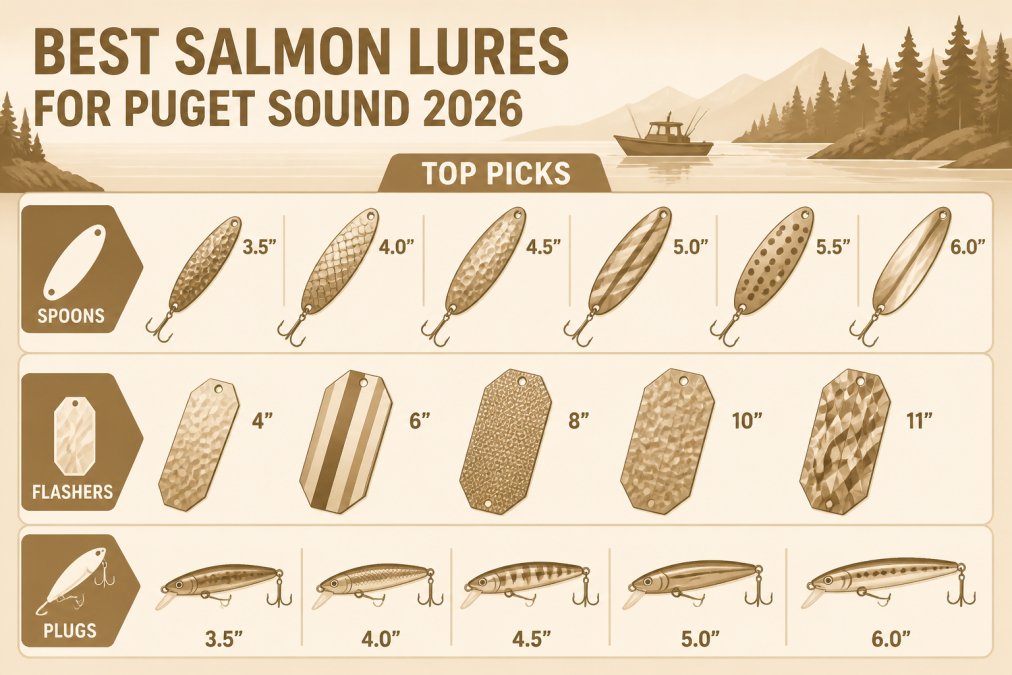
1. Pro-Troll ProChip 11 Flasher, Best All-Around Flasher
The Pro-Troll ProChip 11 Flasher is the workhorse of Puget Sound trolling. This flasher creates an erratic rotation and vibration pattern that mimics an injured baitfish, and the EChip technology emits a small electrical pulse that triggers aggressive strikes. The 11-inch model is most versatile for mixed-species fishing.
What makes this flasher stand out is its proven track record across all three primary salmon species in Puget Sound. The EChip adds an extra sensory trigger beyond visual flash and vibration, critical when water clarity drops or fish are less aggressive. You'll pair this with a hootchie or spoon as your trailing lure. The 8-inch version works better in shallower water or when fish are less aggressive, while the 11-inch excels in deeper trolling scenarios. Available from Elliott's Tackle & Rigging, this flasher should be in every Puget Sound angler's arsenal.
2. Silver Horde Coho Killer Spoon, Best for Coho Salmon
The Silver Horde Coho Killer Spoon earned its name for a reason. This metal spoon features a realistic 3-D eye and fluttery, lifelike action that mimics a vulnerable baitfish. The 3-inch length is ideal for Coho but equally effective on Chinook, Pink, and Chum salmon.
The key to this spoon's effectiveness is its action. Unlike some spoons that produce a tight wobble, the Coho Killer creates a flutter that looks like an injured baitfish struggling to escape. Coho are aggressive feeders that respond to this presentation, and the realistic coloring seals the deal. You can fish it behind a flasher or as a standalone lure when you want less hardware in the water. The spoon's single hook design makes it reliable, and the durable metal construction handles saltwater conditions without degrading.
3. Brad's Killer Fishing Gear Super Bait, Best for Adding Natural Scent
Brad's Killer Fishing Gear Super Bait takes a different approach. This lure features a patented split-cavity design that lets you insert natural bait or scent, producing a tantalizing rotating action. What separates this from straight artificial lures is the ability to combine artificial action with natural bait attraction. You can insert a small herring fillet, add scent, or use it with a six-bead chain swivel for extra vibration.
This versatility makes it exceptionally effective for Chinook and Coho when fish are being selective. The rigged versions come pre-assembled and ready to fish, but unrigged versions give you flexibility to customize your presentation. This is the lure to reach for when standard artificials aren't producing and you need to add a natural element to your trolling spread.
4. Luhr Jensen Kwikfish, Best for Aggressive Trolling
The Luhr Jensen Kwikfish is a classic crankbait that remains one of the most effective plugs in Puget Sound. This lure delivers a full-throttle, wide-action swimming motion that triggers strikes from aggressive fish. The K15 model dives to 15-17 feet without added weight, making it ideal for controlled-depth trolling.
Available in multiple sizes and colors, including UV Bright finishes, the Kwikfish excels when you want maximum action and visibility. The wide wobble is particularly effective during low-light conditions or when water clarity is compromised. Once tuned for straight tracking, this plug produces consistent results and pairs well with downriggers for precise depth control.
5. Gibbs Delta Wee G Spoon, Best for Finesse Presentations
When salmon are cautious or water conditions demand a subtler approach, the Gibbs Delta Wee G Spoon delivers. This compact spoon produces an erratic darting action that attracts even wary fish. The smaller profile makes it ideal when larger lures produce fewer strikes.
The Wee G's erratic darting action is fundamentally different from the flutter of larger spoons, making it effective across various trolling speeds. Available in multiple vibrant colors, it's particularly effective when fish are holding in deeper, cooler water. This spoon works well both behind a flasher and as a standalone lure, with durable construction that resists saltwater corrosion.
6. Tomic Lures Classic Plug, Best for Custom Presentation
Tomic Lures Classic Plug represents handcrafted lure design. These plugs are hand-painted and assembled, featuring an erratic side-to-side swimming action that mimics a wounded baitfish. Made from strong, lightweight plastic with UV inhibitors, they float but dig down when trolled.
Available in sizes from 3 inches to 7 inches and multiple colors, the Tomic plug offers customization options that mass-produced lures can't match. The erratic action is particularly effective when standard presentations aren't generating strikes. This plug excels in downrigging scenarios where you want precise depth control and maximum action.
7. Rhys Davis Big Eye Herring, Best for Natural Bait Presentation
The Rhys Davis Big Eye Herring is purpose-built for anglers who prefer presenting real herring. This bait-holder creates a natural, rolling swimming action when rigged with fresh or brined herring, often used in conjunction with a flasher for maximum attraction.
The Big Eye design creates the illusion of a larger, healthier baitfish, triggering strikes from Chinook and other salmon species. The durable construction handles repeated use and accommodates various herring sizes. This presentation is particularly effective in Puget Sound's deeper marine areas where natural bait often outperforms artificials. Setup requires fresh or brined herring, but the effectiveness often justifies the effort.
8. Danielson Triangle Flasher, Best Budget-Friendly Flasher
The Danielson Triangle Flasher offers exceptional value without sacrificing effectiveness. The unique triangular design reflects light in multiple directions, mimicking baitfish and creating flash and sound to attract fish from distance. Available in 6-inch and 8-inch sizes, it's versatile for various trolling scenarios.
The integrated #5 ball bearing swivel prevents line twisting, critical for all-day trolling sessions. The durable, weather-resistant materials hold up to saltwater conditions. This flasher pairs effectively with hootchies, spoons, or plugs, making it a flexible choice for mixed-species fishing. Elliott's Tackle & Rigging stocks this flasher for anglers who want reliable performance without premium pricing.
How to Rig Hoochies for Salmon
Rigging hoochies correctly is essential for maximizing their effectiveness in Puget Sound. A hootchie is a soft plastic lure that mimics a small squid or baitfish, and proper rigging ensures it produces the right action and presentation.
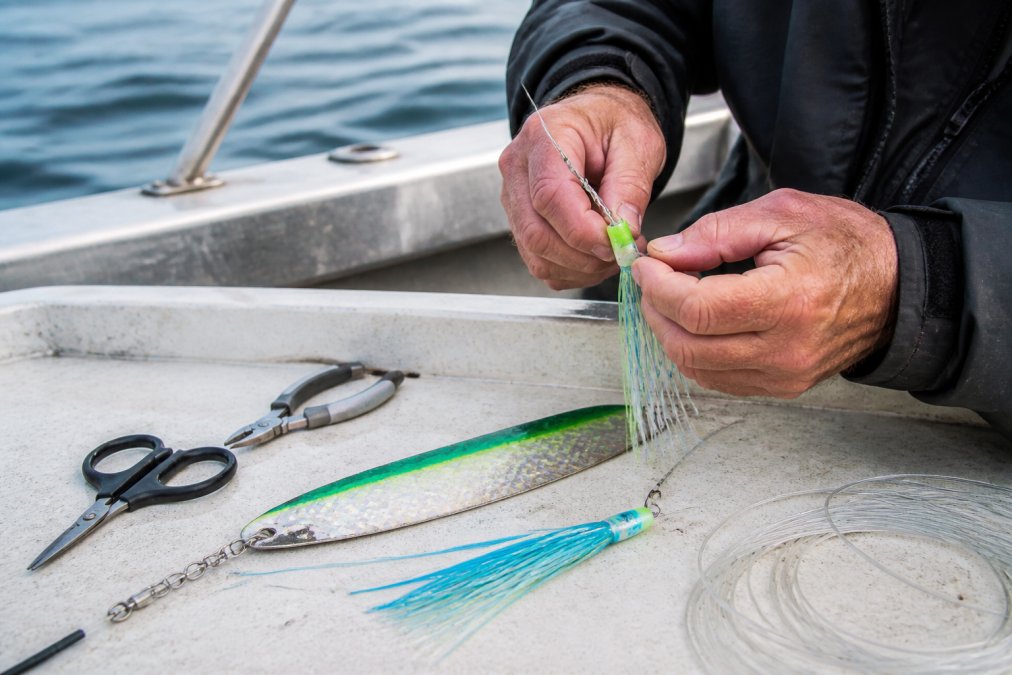
Close-up of experienced angler's demonstrating hootchie rigging technique with flasher, leader line, and terminal tackle visible on a salmon fishing boat with Puget Sound water in the background
Start with a 24-36 inch leader of 20-30 pound monofilament or fluorocarbon, tied directly to your main line using an improved clinch knot or Palomar knot. Attach a ball-bearing swivel to the end of your leader to prevent line twist during trolling. Next, tie your flasher to the swivel using another 12-18 inch leader, positioning the flasher 18-24 inches ahead of your hootchie. Use a size 2 or 3 ball-bearing swivel between the flasher and hootchie leader to prevent twist.
For the hootchie itself, use a single hook or double hook rig depending on your preference. A size 2 or 3 hook works for most hoochies. Thread the hook through the head of the hootchie, positioning it so the lure hangs naturally. Some anglers prefer adding a small bead or spinner blade ahead of the hootchie for extra vibration. Testing in clear water helps you find what produces the right action in your specific conditions.
Best Salmon Fishing Depths for Puget Sound
Water depth in Puget Sound varies dramatically, and salmon location changes seasonally. Understanding depth preferences for different species and times of year is critical for consistent success.
During spring months (March-May), Chinook salmon typically hold in 60-120 feet of water around structure like drop-offs and tide rips. Coho salmon during the same period prefer shallower water, often 40-80 feet. As water warms in summer, both species move deeper, with Chinook pushing to 120-200 feet in July and August.
Fall fishing (September-November) brings salmon shallower again as water temperatures cool. Chinook return to 80-150 foot depths, while Coho often hold in 50-100 feet. Pink salmon, when present during their runs, prefer 30-60 feet throughout the season.
Water temperature is the primary driver of these depth changes. Salmon seek specific temperature zones, typically 50-55 degrees Fahrenheit. During warm summer months, this thermocline sits deeper in the water column. Downriggers are essential for reaching these depths consistently and placing your lure at the exact depth where salmon are feeding.
Current and tide also affect salmon location. Slack water periods often produce better fishing than strong current, though productive areas like tide rips concentrate salmon regardless of tidal stage. Learn the major tide rips in your area and fish them during slack periods for best results.
Puget Sound Salmon Fishing Regulations 2026
Understanding current regulations is non-negotiable for legal and ethical fishing. Puget Sound is divided into marine areas, each with specific regulations that change seasonally.
Marine Area 1 (Westport area) typically allows retention of Chinook and Coho with specific daily limits that vary by season. Check current regulations before fishing, as limits and seasons change annually. The Washington Department of Fish and Wildlife (WDFW) publishes detailed marine area regulations that specify which species are available, daily catch limits, and seasonal closures.
Barbless hook requirements apply in many Puget Sound areas, particularly during catch-and-release periods or for specific species. This regulation affects your lure selection and hook rigging, so verify requirements for your specific marine area before launching.
Retention of wild Chinook is restricted in many Puget Sound areas, with hatchery-origin fish (identifiable by clipped adipose fins) being the only legal retention option. This distinction is critical, misidentifying a wild Chinook as a hatchery fish can result in significant penalties. Learn to identify the difference before you fish.
Check the WDFW website for the most current marine area regulations before each fishing trip. Regulations change regularly, and ignorance of the law is not a defense.
Species-Specific Color and Pattern Selection
Different salmon species respond to different color presentations, and water conditions dramatically affect color effectiveness. Chinook salmon generally respond well to darker, more natural colors like black, dark blue, and silver. These colors mimic the baitfish Chinook typically feed on in Puget Sound.
Coho salmon are more aggressive feeders and often respond to brighter, more contrasting colors. Chartreuse, orange, and hot pink patterns trigger strikes from Coho, particularly when combined with metallic finishes. Pink salmon respond well to bright, high-contrast patterns, with fluorescent finishes and metallic combinations working particularly well.
Water clarity is the primary modifier of color selection. In clear water, natural colors like silver and black work best because they match actual baitfish. In turbid water or low-light conditions, brighter colors with more contrast become more effective. UV-reactive finishes are effective across conditions because they reflect ultraviolet light that salmon can see.
Test multiple colors during each fishing session. Start with what you expect to work based on conditions, then experiment if you're not getting strikes. Keep detailed notes on what works during different conditions, this personal data becomes invaluable over multiple seasons.
Lure Maintenance and Hook Replacement
Proper maintenance extends lure life and ensures consistent performance. After each fishing trip, rinse all lures with fresh water to remove salt and debris. Pay particular attention to hooks, swivels, and connection points where corrosion typically starts.
Inspect hooks before each use. Bent, dulled, or corroded hooks significantly reduce hookup rates. Replace hooks that show any signs of damage. For spoons and plugs, check the finish regularly and refresh with clear nail polish or UV-protective coatings to extend lure life.
Flashers and dodgers require regular inspection of swivels and connection points. Swivels that don't rotate freely create line twist and reduce presentation quality. Replace worn swivels immediately, they're inexpensive and critical to proper lure action.
Store lures in a cool, dry location away from direct sunlight. UV exposure degrades plastic lures and fades finishes. Tackle boxes with compartments keep lures organized and protected. Test lure action regularly by observing it in clear water before fishing. A lure that's lost its action due to damage or wear should be retired or repaired.
The best salmon lures for Puget Sound 2026 require matching the right tool to current conditions, target species, and water characteristics. Elliott's Tackle & Rigging stocks all these proven lures, hand-selected by anglers with decades of experience on these waters. Start with the core options covered here, then build your collection based on what works in your specific fishing locations and seasons. Success in Puget Sound comes from understanding how salmon respond to different presentations and having the right gear to execute those presentations consistently.
Frequently Asked Questions
What are the best salmon lures for Chinook salmon in Puget Sound?
Chinook salmon respond well to larger, flashier presentations. Pro-Troll ProChip 11 Flashers paired with hootchies or spoons are proven choices. Luhr Jensen Kwikfish and Tomic Lures Classic Plugs also excel for Chinook. The key is matching lure size to water clarity and using colors like chartreuse, silver, and UV-reactive finishes. Brad's Killer Fishing Gear Super Bait works when you add scent or natural bait to increase attraction.
Do I need different lures for Coho and Pink salmon in Puget Sound?
Yes, coho and pink salmon have different preferences. The Silver Horde Coho Killer Spoon is specifically designed for coho with its realistic 3-D eye and fluttery action. Pink salmon often respond to smaller, faster-moving presentations like the Gibbs Delta Wee G Spoon. Coho tend to be more aggressive than pink salmon, so faster trolling speeds and more erratic lure actions work better for them. Adjust your trolling speed and lure size based on the species you're targeting.
How do I rig hoochies for salmon in Puget Sound?
Hootchies should be rigged behind a flasher like the Danielson Triangle Flasher or Pro-Troll ProChip 11. Use a 24- to 36-inch leader line between the flasher and hootchie, tied with a reliable knot like a Palomar or improved clinch knot. Attach the hootchie to a ball-bearing swivel to prevent line twist. Add a #2 or #4 hook through the head of the hootchie. Test your rig in calm water to ensure the hootchie tracks straight behind the flasher without spinning.
What depth should I fish for salmon in Puget Sound?
Salmon depth varies by season and water temperature. Spring and early summer: fish 30-60 feet deep. Mid-summer: move deeper to 60-90 feet where cooler water holds fish. Fall: return to shallower 20-50 feet. Use a downrigger to maintain precise depth and adjust based on thermocline location. Water temperature matters more than depth alone; salmon follow baitfish to cooler zones, typically 50-55°F. Check local reports for current thermocline depth before fishing.
What are the WDFW regulations for salmon fishing gear in Puget Sound in 2026?
Washington Department of Fish and Wildlife (WDFW) requires barbless hooks or hooks with barbs filed down for catch-and-release compliance in most marine areas. Check your specific marine area regulations, as some have additional restrictions on lure size, number of lines, and seasonal closures. Chinook seasons vary by marine area; some areas have year-round access while others close seasonally. Visit the WDFW website for current 2026 marine area regulations before fishing, as rules change annually.
0 comments