

Table of Contents
- Quick Comparison: Best Salmon Fishing Waders for Cold Weather
- Breathable vs Neoprene Waders for Cold Water
- How to Keep Feet Warm in Waders
- Layering Systems for Sub-Zero Salmon Fishing
- Durability, Mobility, and Cold-Weather Repair
- How to Choose the Right Fit and Insulation
- Frequently Asked Questions
Last Updated: October 1, 2026
Quick Comparison: Best Salmon Fishing Waders for Cold Weather
The best salmon fishing waders for cold weather are built around three things: insulation, mobility, and a fit that lets you layer without restriction. This guide from Elliott's Tackle & Rigging walks through the choices that actually matter when water temperatures drop and you're standing waist-deep in a Pacific Northwest tide or a Great Lakes tributary for hours.
Cold-water salmon fishing punishes bad gear choices. You're not moving much. You're standing in current. And when the bite is slow, your body cools fast. Waders that work fine in September can turn dangerous in December.
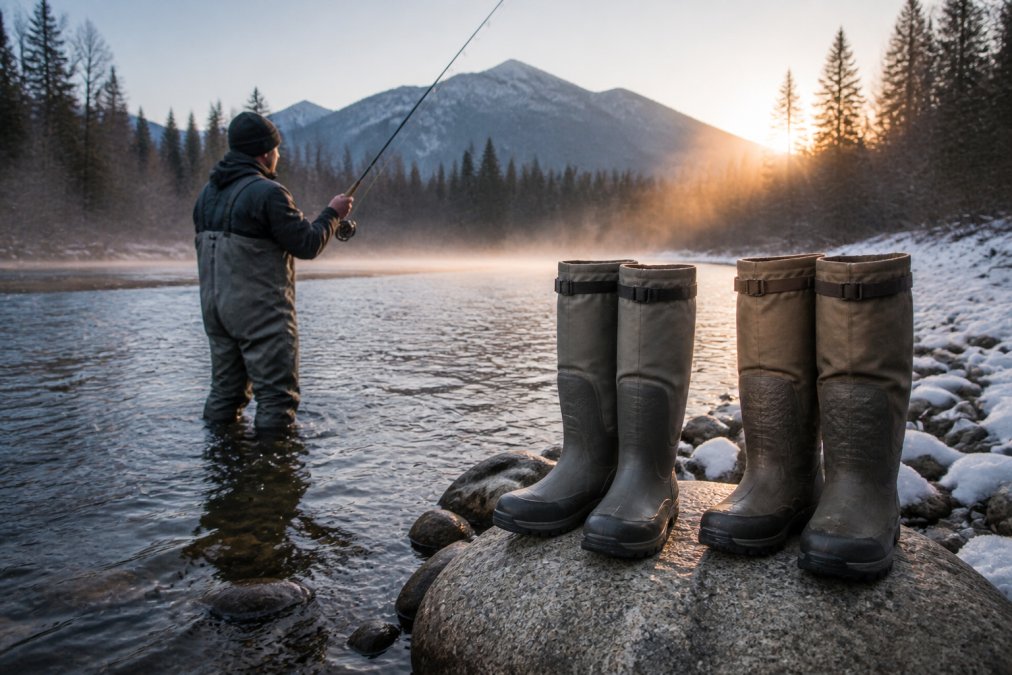
Below, we'll break down the real decision points: breathable versus neoprene, bootfoot versus stockingfoot, layering systems, and how to size waders when you're wearing thick insulation underneath. If you already know what you want, browse the wader selection at Elliott's Tackle & Rigging and skip ahead.
| Wader Type | Insulation | Best For | Trade-Off |
|---|---|---|---|
| Neoprene (3mm-5mm) | Built-in, high | Extreme cold, static fishing | Heavy, less breathable |
| Breathable + layers | Customizable | Long walks, active fishing | Requires disciplined layering |
| Bootfoot | Integrated boot | Coldest days, easy on/off | Less ankle support |
| Stockingfoot | Separate wading boot | Mobility, technical wading | Extra step, more gear |
Breathable vs Neoprene Waders for Cold Water
Breathable waders win for mobility and long walks. Neoprene wins for standing still in freezing water. The right answer depends on how you fish, not on which material is "better."
When Neoprene Wins
Neoprene traps a thin layer of water against your body and warms it. That's the whole trick. A 5mm neoprene wader keeps you warm even when you're not generating heat, which matters on those January days when you're holding position in a tailout and barely moving.
The downside is weight and breathability. Walk a mile in 5mm neoprene and you'll sweat. Sweat is the enemy in cold weather because it chills you the moment you stop moving.
When Breathable Fabric Wins
Breathable waders let moisture vapor escape while keeping liquid water out. Pair them with a proper base layer and mid-layer, and you get warmth without the bulk. This is the better call for anglers who cover ground, hike into spots, or fish in conditions that swing between cold and mild.
The catch: breathable waders only work as well as your layering system. Skip the base layer and you'll be colder than you'd be in neoprene.
How to Keep Feet Warm in Waders
Keeping feet warm in waders comes down to three variables: boot type, sock choice, and whether your feet stay dry. Get any one of those wrong and you'll be miserable by mid-morning.
Bootfoot vs Stockingfoot for Cold Water
Bootfoot waders have the boot built in. Stockingfoot waders require a separate wading boot. For cold weather, bootfoot has a real advantage: fewer seams, less water intrusion, and room for thick socks.
Stockingfoot gives you better ankle support and lets you match your boot to the terrain.
Layering Systems for Sub-Zero Salmon Fishing
Most layering advice stops at "base, mid, outer." That's not a system, it's a slogan. When you're standing in 34-degree water for six hours, the difference between staying warm and going home early comes down to how each layer interacts with the next, and how the whole stack behaves when you're not generating heat.
The Three-Layer Stack for Freezing Water
Base layer (moisture management): Merino wool in 200-260 gsm, or a synthetic grid fleece. Merino regulates better across stop-and-go cycles; synthetics dry faster. For sub-zero days, merino is the safer call because it keeps insulating even when damp. Never cotton, it holds water and pulls heat from your skin.
Matching the System to Water Temperature
- 40-50°F water: Base layer + light fleece. Breathable waders. This is the shoulder-season salmon window.
- 35-40°F water: Base layer + mid-layer + windproof top. Consider 3mm neoprene if you'll be static.
- Below 35°F water: Merino base + two thin mid-layers + windproof top + 5mm neoprene, or breathable waders with a heated vest as a backup. This is where the system either works or you leave early.
The Weight-to-Warmth Ratio
A bulky mid-layer that restricts your cast is worse than a thinner one that lets you move freely. Movement generates heat; restriction kills it. Test your full layering system before you commit to a long day, squat, cast, and simulate netting a fish. If any layer binds at the shoulder or crotch, size up the wader or swap the layer.
Heated Vests: Useful, But a Failure Point
Heated vests under breathable waders work, and they extend your range in extreme cold. But they add a battery, a controller, and a failure point. If the battery dies at 4 p.m. on a 28-degree day, you're done. Treat a heated vest as a supplement to a solid layering system, not a replacement for one. Carry a spare battery or a chemical heat pack as backup.
Durability, Mobility, and Cold-Weather Repair
Durability in cold weather comes down to three things: seam quality, abrasion resistance, and how the material handles flexing at low temperatures. Cold makes everything more brittle, including wader fabric and adhesives, so the failure modes you see in winter are different from summer.
What to Look For in Cold-Weather Waders
- Reinforced knees and seat: The two highest-wear zones when you're kneeling to net a salmon or sitting on a cold rock.
- Articulated knees: Pre-shaped fabric that lets you squat and wade without stressing seams. This matters more in cold weather because stiff material resists bending.
- Taped or sealed seams: Welded seams outperform stitched-and-taped in cold flex cycles. Check the seam tape for lifting, a common failure point after a season of freezing and thawing.
- Wader belt and suspenders: A belt keeps the wader in place when you're fighting a fish and distributes weight across your shoulders instead of your waist. Suspenders with wide, padded straps reduce fatigue on long days.
Mobility in Near-Freezing Water
Neoprene stiffens as water temperature drops, which is why a 5mm wader that feels fine at 45°F can feel like a straitjacket at 33°F. Breathable fabrics with a laminated membrane stay more flexible, but they rely on your layering system for warmth. If you fish sub-zero conditions regularly, size up slightly to preserve range of motion, you'll need it for kneeling, netting, and climbing banks.
Field Repair When It's Below Freezing
- Find the leak first. Fill the wader with air and submerge sections in water, or use the alcohol-and-water spray method on a dry wader. Mark the spot.
- Dry the area completely. Any moisture at the repair site prevents adhesion. Use a rag and body heat if needed.
- Warm the patch and the wader surface. Keep the patch in an inside pocket against your body. Warm the wader fabric with your hand or a chemical heat pack for a minute before applying.
- Apply and hold. Press firmly for at least 60 seconds, then keep pressure on it for several minutes. Cold adhesive needs longer to set.
- Let it cure before wading. If possible, wait 30 minutes before putting the wader back in the water. A repair that fails mid-river is worse than no repair.
Durable water repellent (DWR) finishes wear off. Reapply DWR seasonally to keep the outer fabric from wetting out. A wetted-out breathable wader stops breathing, which means you get cold from the inside, the opposite of what you bought it for.
For waders built with reinforced knees, sealed seams, and cold-weather durability in mind, see the selection at Elliott's Tackle & Rigging.
How to Choose the Right Fit and Insulation
Fit is the single most overlooked factor in cold-weather wader selection. A wader that fits perfectly over a t-shirt will be too tight over a base layer, a mid-layer, and a fleece.
- Can you squat without the crotch binding?
- Do the shoulders allow a full cast?
- Is there room in the boot for thick socks?
- Does the wader belt sit at your waist, not your ribs?
Frequently Asked Questions
What is the best wader for cold weather fishing?
For sustained cold-water salmon fishing, neoprene waders provide the most warmth because the material itself insulates. Breathable waders work better for active anglers who layer underneath with moisture-wicking base layers and fleece mid-layers. The right choice depends on how much you move, how deep you wade, and whether you fish in sub-zero conditions or just chilly mornings.
Are breathable waders better than neoprene for cold water?
Breathable waders offer better moisture management and mobility, which matters when you hike into a salmon run or cover long stretches of river. Neoprene waders trap heat without layers, making them simpler for short, stationary sessions. For most salmon anglers working cold rivers all day, breathable waders paired with a proper layering system outperform neoprene because sweat stays off your skin.
How do I keep my feet warm in waders in cold weather?
Start with a moisture-wicking liner sock, then add a thick wool or synthetic insulating sock. Avoid cotton, which holds sweat and chills your feet. Make sure your wading boots have enough room for both socks without compressing them, because tight boots cut circulation. Neoprene booties on stockingfoot waders help, and bootfoot waders with built-in insulation work well for stationary fishing.
What features should I look for in cold weather salmon fishing waders?
Look for a wader belt, articulated knees for mobility, a secure suspender system, and reinforced abrasion resistance at the knees and seat. Breathability rating matters if you hike or wade hard. Gravel guards keep debris out, and seam sealing quality determines how long the waders last. Waterproof zippers add convenience but need care in freezing conditions.
0 comments