

Table of Contents
- Why Halibut Jigs for Deep Water Matter
- Quick Comparison Table
- 1. Williamson Kensaki 280: Maximum Depth Reach
- 2. Williamson Kensaki 220: Versatile Mid-Range Performer
- 3. Williamson Vortex Speed 200: Flash and Rotation
- 4. Williamson Kensaki 170: Lighter Deep-Water Option
- How to Jig for Halibut: Setup and Technique
- Halibut Jig Weight Selection by Depth and Current
- Frequently Asked Questions
Last Updated: October 10, 2026
Why Halibut Jigs for Deep Water Matter
Deep water halibut fishing demands precision equipment. When you're working 200+ feet down with heavy currents and low visibility, your jig choice determines whether you blank or load the boat. The wrong jig either won't reach bottom or arrives there looking nothing like the baitfish halibut actually chase. At Elliott's Tackle & Rigging, we've spent forty years watching anglers succeed and fail on the same grounds, and the difference almost always comes down to jig selection and presentation.
Halibut in deep water behave differently than their shallow cousins. They're aggressive, but they hunt by lateral line detection as much as sight. A jig that falls too slowly never reaches the strike zone. One that tumbles erratically looks wounded, which triggers bites. The key is matching jig weight to depth and current, then working it with the lift-and-fall cadence that halibut can't ignore.
This guide covers halibut jigs for deep water. We'll explain what makes each one work, when to use it, and how to rig and fish it so you actually connect with fish instead of just reaching bottom.
Quick Comparison Table
| Jig | Weight | Best For | Price |
|---|---|---|---|
| Williamson Kensaki 280 | 9-7/8 oz | Maximum depth, heavy current | $16.99 |
| Williamson Kensaki 220 | 7-3/4 oz | Versatile mid-range fishing | $20.99 |
| Williamson Vortex Speed 200 | 7 oz | Flash and rotation attraction | $17.99 |
| Williamson Kensaki 170 | 6 oz | Lighter presentations | $14.99 |
1. Williamson Kensaki 280: Maximum Depth Reach
The Kensaki 280 is built for anglers who fish the absolute bottom. At 9-7/8 ounces and 7.25 inches, this knife-tip jig cuts through the water column quickly. You need that speed when you're dropping into deep canyons or fighting heavy currents that want to sweep your line sideways.

The asymmetrical knife-tip profile isn't just for show. It slices downward with minimal resistance, which means less time wasted getting to the strike zone. Once you're working it, the inline eyelets keep the jig stable on the drop and promote that tight horizontal flutter that triggers strikes. Work it with a lift-and-fall slow-pitch retrieve: aggressive upward dart on the lift, seductive fluttering glide on the fall.
The UV Chartreuse Glow Zebra finish cuts through murky water and low-light conditions. When visibility drops or you're fishing dawn and dusk, this color stands out without looking unnatural.
This jig excels when you need maximum depth reach and can't compromise on getting down fast. It's overkill for shallow water, but it is effective when fishing deep canyons.
NOAA guidance on deep-water saltwater fishing zones identifies depth zones where halibut congregate, and the Kensaki 280 is purpose-built for those conditions.
2. Williamson Kensaki 220: Versatile Mid-Range Performer
The Kensaki 220 is a versatile jig for the 200-300 foot range.
At 7-3/4 ounces and 6.75 inches, this jig hits the sweet spot between speed and control. It reaches depth fast enough to stay in the strike zone, but not so fast that you lose the ability to feel the bottom and detect subtle bites. The asymmetrical knife-tip profile slices through current, and inline eyelets keep it oriented for that signature tight flutter.
Available in multiple color options, Blue Lagoon, Chartreuse Blink, Silver Blink, Candy Floss, Hot Sauce, and Mack Daddy, the Kensaki 220 lets you match water clarity and light conditions. In crystal-clear water, the Silver Blink and Blue Lagoon patterns work. When visibility drops or you're fishing low-light periods, Chartreuse Blink and Hot Sauce produce. The color variety means you're never guessing.
The Kensaki 220 is available from Elliott's Tackle & Rigging in multiple finishes, and it's the jig we reach for most often when conditions are variable. You won't outgrow it.
3. Williamson Vortex Speed 200: Flash and Rotation
The Vortex Speed 200 takes a different approach to triggering halibut. The hydrodynamic body with opposing convex and concave sides causes the lure to rotate naturally on the fall. As it spins, the two-sided color finish generates intense flash.

At 7 ounces and 6.25 inches, it reaches 200-280 feet effectively. The rotation adds a visual component that standard flutter jigs can't match. In low-visibility water or when halibut are sluggish, that extra flash can be effective.
Williamson Kensaki 280 Jig - 7.25" - 9-7/8oz - UV Chartreuse Glow Zebra →
The Vortex Speed 200 comes pre-rigged with a stainless steel ball-bearing swivel and a single VMC Assist hook. You don't have to tie anything, it's ready to fish out of the package. The heavy-duty ball-bearing swivel allows the lure to move freely, which amplifies the rotation.
This jig shines when you're fishing sandy bottoms or areas with moderate structure. The flash attracts fish from distance, and the assist hook design ensures solid hookups. It's not the deepest-reaching option, but for 200-280 foot work, it's effective.
4. Williamson Kensaki 170: Lighter Deep-Water Option
Not every situation demands maximum weight. When you're fishing 150-220 feet in moderate current, the Kensaki 170 delivers.

At 6 ounces and 6 inches, this jig is smaller and lighter than the 220 and 280. It still reaches respectable depth, but the lighter weight means you'll feel bottom contact more clearly. You'll detect subtle bites that heavier jigs can mask. The asymmetrical knife-tip profile works the same way as the larger Kensaki models, quick descent with tight horizontal flutter on the fall.
The UV Green Sardine Zebra finish matches natural baitfish coloration. In clear water, this pattern can be effective. The zebra striping adds visual complexity that mimics real baitfish scales.
This jig works best when conditions are favorable, moderate current, and reasonable visibility. It's the precision tool in the deep-water arsenal. But when conditions align, it can be very effective.
How to Jig for Halibut: Setup and Technique
Jig selection is important. Rigging and presentation are also important.
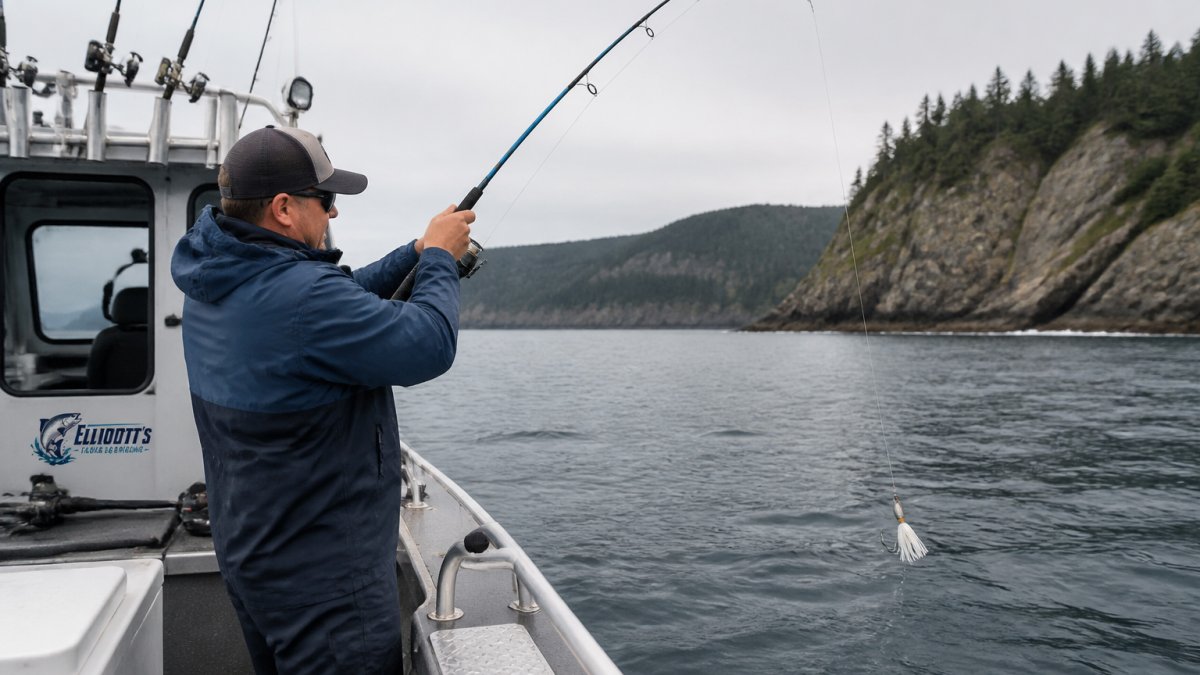
Halibut Jigging Setup Essentials
Your rod and reel matter. A jigging rod needs sensitivity to feel bottom and bite detection, but enough backbone to drive the hook home and control a halibut in current.
A medium-heavy jigging rod in the 6-7 foot range works for deep-water halibut. Shorter rods can give you better control in current and easier hooksets. Longer rods cast farther but sacrifice precision. For deep water where you're dropping straight down, shorter can be better.
Pair it with a conventional reel spooled with 50-80 pound braided line. Braided line has minimal stretch, which means you feel bottom contact and bites. Monofilament stretches more, which can make deep-water jigging less effective.
A 30-50 pound fluorocarbon leader (18-24 inches) connects your main line to the jig. Fluorocarbon is nearly invisible underwater and resists abrasion from rocky bottoms. Tie it with an improved clinch knot or Palomar knot.
Attach the jig directly to the leader using a loop knot. A loop knot lets the jig move freely, which enhances its action.
The Lift-and-Fall Retrieve
Halibut respond to a specific cadence. Drop your jig to bottom, then work it with a lift-and-fall rhythm: sharp upward jerk (12-18 inches), pause for 1-2 seconds while the jig falls under controlled slack line, repeat.
The upward jerk triggers the aggressive dart. The pause and fall trigger the seductive flutter. Maintain tension enough to feel bottom contact and bites, but loose enough that the jig actually flutters.
Williamson Kensaki 280 Jig - 7.25" - 9-7/8oz - UV Chartreuse Glow Zebra →
Work the jig vertically or with a slight side-to-side sweep. Vertical jigging is effective, but slight sweeps help you cover more water and locate fish. Stay in contact with bottom. Halibut can be found near structure and rocky terrain, if you're not touching bottom, you may not be in the strike zone.
Maintain steady rhythm. Consistent lift-and-fall patterns can trigger feeding responses.
Halibut Jig Weight Selection by Depth and Current
Jig weight isn't arbitrary. Match it to depth and current speed, or you'll either waste time getting down or lose bottom contact entirely.
For 150-200 feet with light to moderate current (under 1.5 knots), a 5-6 ounce jig like the Kensaki 170 reaches bottom quickly while maintaining control. You'll feel bites clearly and detect structure.
At 200-250 feet with moderate current (1.5-2.5 knots), the 7-7.75 ounce range (Kensaki 220, Vortex Speed 200) balances depth reach and presentation control. This covers most productive halibut grounds.
Beyond 250 feet or in heavy current (over 2.5 knots), the 9-10 ounce range (Kensaki 280) becomes necessary. Lighter jigs won't reach bottom or will get swept sideways before you can work them effectively.
Current speed matters as much as depth. Always prioritize staying in contact with bottom and maintaining presentation control over reaching maximum depth.
Carry multiple weights. Conditions change throughout the day, current picks up, visibility shifts, halibut move to different depths. Elliott's Tackle & Rigging stocks the full range of Williamson jigs, so you can dial in the exact weight your conditions demand. Research on tidal current patterns and fishing productivity shows that current strength directly correlates with successful bottom contact and strike detection.
Start with the lightest jig that reaches bottom and maintains control. If you're not feeling bottom or losing bites, move up one weight class. This approach helps you fish effectively.
Deep water halibut fishing rewards precision and persistence. The halibut jigs for deep water covered here represent effective options for serious anglers. Choose based on your depth, current conditions, and water clarity. Elliott's Tackle & Rigging carries all of them, hand-selected by a captain with forty years on the water who refuses to stock anything that doesn't produce results. Get started with the right jig, master the lift-and-fall retrieve, and you'll be well-equipped for deep-water fishing.
Frequently Asked Questions
What size jig is best for deep-water halibut?
For deep water halibut jigging, the Williamson Kensaki 280 at 9-7/8 oz and 7.25 inches excels in reaching depth quickly, while the Kensaki 220 at 7-3/4 oz offers versatility across moderate depths. Size choice depends on water depth and current strength. Deeper water and stronger currents demand heavier jigs to maintain bottom contact and feel the bite.
How do you set up a halibut jigging setup?
A solid halibut jigging setup includes a medium-heavy rod, braided mainline for sensitivity and depth control, and a quality reel with smooth drag. Attach your jig directly or via a short fluorocarbon leader. The tight horizontal flutter during the fall is what triggers strikes from deep-water halibut.
What color halibut jig works best in different water conditions?
In clear water, natural colors like UV Green Sardine Zebra and UV Silver mimic baitfish profiles. In darker or murky conditions, chartreuse and bright colors such as Chartreuse Blink and Hot Sauce generate visibility and flash. UV finishes enhance visibility across all light levels. Match color to water clarity and light penetration for best results.
How heavy should a halibut jig be for deep water and strong currents?
Jig weight depends on depth and current speed. For depths under 150 feet with moderate current, 6-7 oz works well. For 150-250 feet or heavy rips, use 7-3/4 oz or heavier. The Kensaki 280 at 9-7/8 oz handles extreme conditions. Heavier jigs maintain bottom contact and reduce drift in fast-moving water.
0 comments